
Evaluation of the impact of a pharmacist-driven protocol on assessing patient adherence to oral oncolytics at a community cancer center
1Holy Name Medical Center
Background:
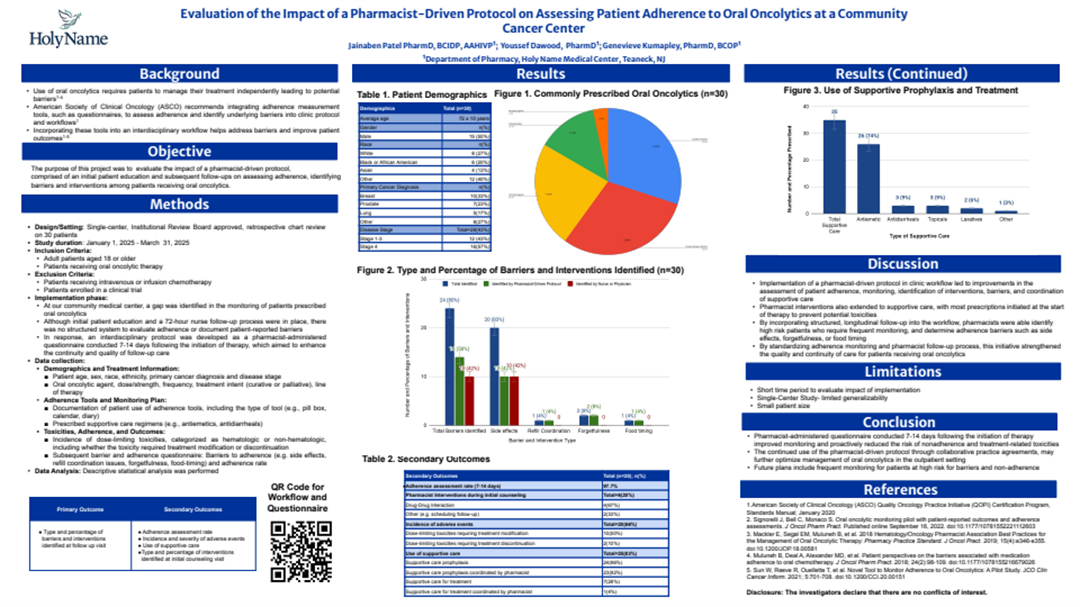
The use of oral oncolytics requires patients to manage their treatment independently treatment independently leading to potential barriers. The American Society of Clinical Oncology (ASCO) recommends integrating adherence measurement tools, such as questionnaires, to assess adherence and identify underlying barriers into clinic workflows. At our community medical center, a gap was identified in the monitoring of patients prescribed oral oncolytics. Although initial patient education and a 72-hour nurse follow-up process were in place, there was no structured system to evaluate adherence or document patient-reported challenges. In response, an interdisciplinary protocol was developed which aimed at enhancing the continuity and quality of follow-up care. This Institutional Review Board (IRB)-exempt retrospective quality improvement study was conducted in 30 patients from January 1, 2025 to March 31, 2025. The study evaluated the impact of a pharmacist-driven protocol, compromised of an initial patient education and subsequent follow-ups on assessing adherence, identifying interventions and barriers among patients receiving oral oncolytics.
Objectives:
- Describe the use of a pharmacist-driven protocol in assessing patient adherence and identifying barriers to oral oncolytics at a community cancer center.
- Identify and analyze the key barriers that contribute to non-adherence in patients on oral oncolytic therapy.
- Assess pharmacist-led supportive care interventions that prevent adverse effects and enhance clinical outcomes in patients receiving oral oncolytic therapy.
Methods:
The mean adherence rate to treatment was 97.7%, as assessed using a pharmacist-administered questionnaire conducted 7-14 days following the initiation of therapy. Twenty-four barriers were identified in 21 patients (70%) during subsequent follow-up assessments, with the most common as side effects (20, 83.3%). Among the 20 patients who experienced side effects, 10 (50%) developed dose-limiting toxicities, and supportive care was prescribed to 7 (35%) of these patients. The Pharmacist-driven protocol identified 5 interventions such as drug-drug interactions in the initial counseling and 14 barriers (58.3%) in the subsequent follow up. Prophylactic supportive care was provided to 24 patients (80%), with pharmacists initiating and coordinating 95.8% (23) of these cases.
Results:
The implementation of a pharmacist-driven protocol led to improvements in the assessment of patient adherence, monitoring, identification of interventions, barriers, and coordination of supportive care. By incorporating structured, longitudinal follow-up into the workflow, pharmacists were able identify high risk patients who require frequent monitoring, and determine adherence barriers such as side effects, cost, forgetfulness, or food timing. Pharmacist intervention also extended to supportive care, with most prescriptions initiated at the start of therapy to prevent potential toxicities. By standardizing adherence monitoring and pharmacist follow-up process, this initiative strengthened the quality and continuity of care for patients receiving oral oncolytics. The continued use of the pharmacist-driven protocol through collaborative practice agreements, may further optimize management of oral oncolytics in the outpatient setting.
Funding: Not applicable
Send your feedback
Please do not include any personal information or details.
"*" indicates required fields
Was this page
helpful?
Send your feedback
Please do not include any personal information or details.
"*" indicates required fields