
Essential Training; Effective Use Of Chemotherapy Spill Kits
1Mass General Cancer Center Center
Background:
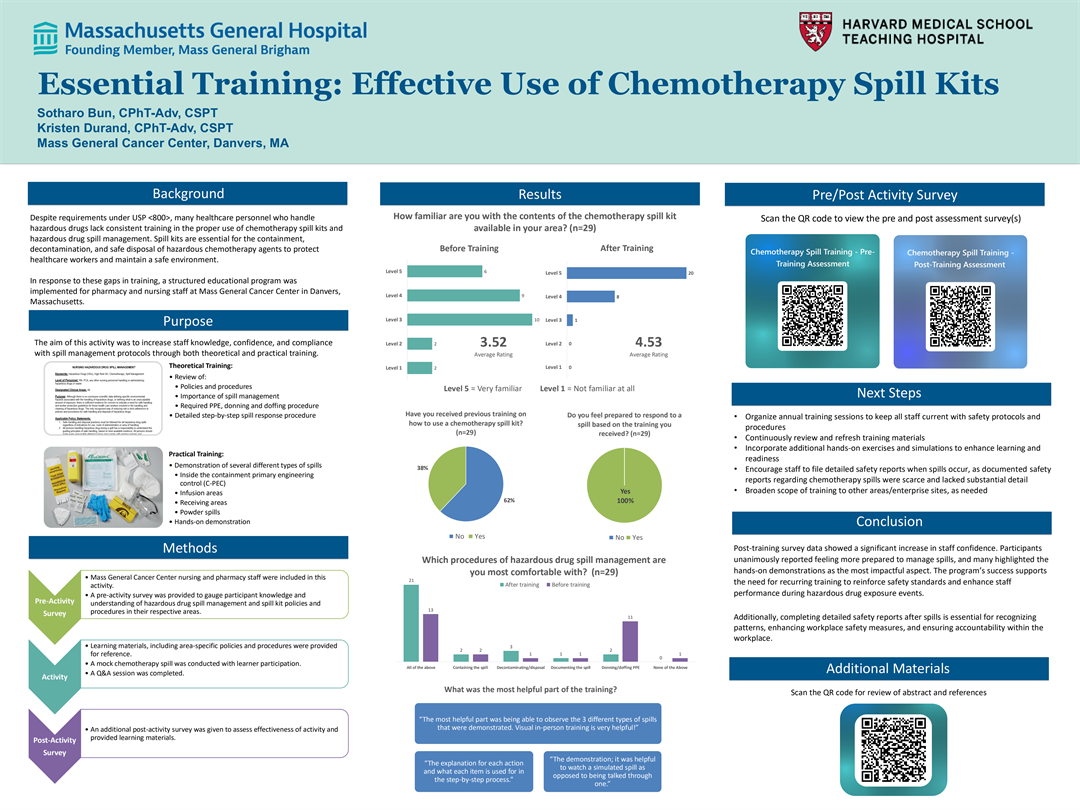
Despite requirements under United States Pharmacopeia (USP) <800>, many healthcare personnel who handle hazardous drugs lack consistent training in the proper use of chemotherapy spill kits. These kits are essential for the containment, decontamination, and safe disposal of hazardous chemotherapy agents to protect healthcare workers and maintain a safe environment. In response to these gaps in training, a structured educational program was implemented for pharmacy and nursing staff at Mass General Cancer Center. The aim was to increase staff knowledge, confidence, and compliance with spill management protocols through hands-on and theoretical training.
Objectives:
- Identify the essential components of a chemotherapy spill kit and the steps in proper hazardous drug spill management and response.
- Apply institutional protocols and personal protective equipment (PPE) procedures during simulated hazardous drug spill scenarios.
- Evaluate staff preparedness and confidence before and after chemotherapy spill kit training interventions.
Methods:
Participants completed a pre-activity survey to assess baseline knowledge, followed by a training session that included: (1) a review of policies and procedures; (2) required PPE and donning and doffing processes; (3) step-by-step spill response overview; (4) hands-on demonstrations of various spill scenarios (e.g., infusion areas, containment primary engineering control [C-PEC], powder); (5) interactive question & answer (Q&A) and breakout sessions. A post-activity survey was used to evaluate improvements in knowledge, staff preparedness, and feedback on training effectiveness. This training model, which combines policy review with hands-on and visual learning, can be adapted to other hospital departments and institutions, particularly in oncology settings where exposure risks are higher.
Results:
Post-training survey data showed a significant increase in staff confidence. Participants unanimously reported feeling more prepared to manage spills, and many highlighted the hands-on demonstrations as the most impactful aspect. The program’s success supports the need for recurring training to reinforce safety standards and enhance staff performance during hazardous drug exposure events.
Funding: Not applicable.
Send your feedback
Please do not include any personal information or details.
"*" indicates required fields
Was this page
helpful?
Send your feedback
Please do not include any personal information or details.
"*" indicates required fields