

Ibrutinib in the management of chronic lymphocytic leukemia with leptomeningeal involvement: case study and literature review
1Carolina Blood and Cancer Care Associates, 2NCODA, 3Community Clinical Oncology Research Network, 4Cencora
Background:
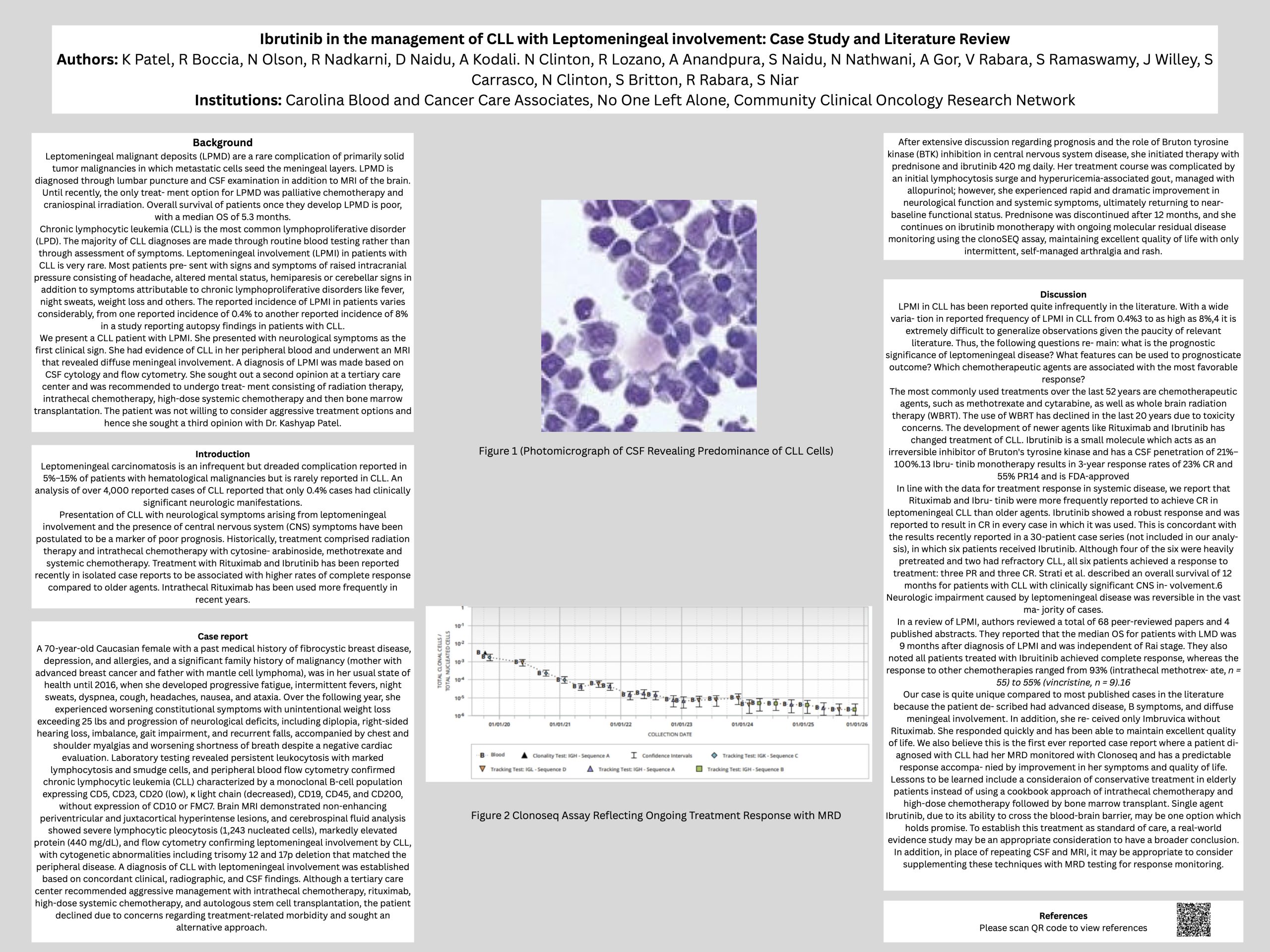
Leptomeningeal involvement is a rare complication of malignancy associated with poor prognosis and limited treatment options. Leptomeningeal involvement in chronic lymphocytic leukemia (CLL) is particularly uncommon, with variable reported incidence, and typically presents with neurologic symptoms of increased intracranial pressure. We report a patient with CLL whose initial presentation was neurologic, with diffuse leptomeningeal disease confirmed by magnetic resonance imaging (MRI) and cerebrospinal fluid (CSF) cytology and flow cytometry.
Objectives:
- Recognize leptomeningeal involvement as a rare manifestation of chronic lymphocytic leukemia with historically poor prognosis.
- Describe the role of targeted therapy with single- agent ibrutinib in managing leptomeningeal CLL, including its central nervous system penetration and potential to improve neurologic symptoms.
Case Report:
A 70-year-old woman presented with progressive neurologic symptoms, constitutional “B” symptoms, and weight loss and was found to have CLL with diffuse leptomeningeal involvement confirmed by brain MRI and cerebrospinal fluid cytology and flow cytometry, including cytogenetic abnormalities consistent with peripheral disease. Although aggressive multimodal therapy was recommended at a tertiary center, she declined because of concerns about toxicity and instead initiated treatment with prednisone and single-agent ibrutinib. Her course was notable for transient lymphocytosis and hyperuricemia, followed by rapid and marked improvement in neurologic and systemic symptoms, with a return to near-baseline functional status. She continues ibrutinib monotherapy with sustained clinical response, measurable residual disease monitoring via clonoSEQ, and preserved quality of life.
Discussion:
Leptomeningeal involvement in CLL is rare and poorly characterized, with reported incidence varying widely and limited data to guide prognosis and management. Historically, treatment relied on intrathecal chemotherapy and radiation, but these approaches carry significant toxicity and uncertain benefit. Emerging evidence from case reports and small series suggests that newer targeted agents, particularly ibrutinib due to its ability to penetrate the blood–brain barrier, are associated with higher response rates and reversal of neurological symptoms compared with older therapies. This case supports consideration of less aggressive, targeted treatment strategies in select patients and highlights the potential role of molecular residual disease monitoring as an adjunct to CSF and imaging in assessing treatment response.
Conclusions:
This case demonstrates that leptomeningeal involvement in CLL, though rare and traditionally associated with poor outcomes, may respond favorably to targeted therapy with single-agent ibrutinib. The patient achieved rapid neurological improvement and sustained clinical and molecular response with preserved quality of life, despite declining aggressive multimodal treatment. These findings suggest that ibrutinib may represent an effective and less toxic therapeutic option for central nervous system (CNS)-involved CLL, warranting further investigation through real-world evidence and larger studies.
Funding: Not applicable.
Send your feedback
Please do not include any personal information or details.
"*" indicates required fields
Was this page
helpful?
Send your feedback
Please do not include any personal information or details.
"*" indicates required fields