

Drug monitoring in community oncology: smart monitoring and backup power for safety and savings
1American Oncology Network
Background:
Maintaining precise temperature control is essential to preserve the safety and efficacy of temperature-sensitive pharmaceutical products. Medications, vaccines, and biologics are vulnerable to degradation when exposed to temperature excursions outside required storage conditions. Continuous temperature monitoring with realtime alerts enables rapid detection of deviations, reducing product loss and supporting regulatory compliance; however, power outages and system failures can interrupt monitoring and increase risk. Integrating uninterruptible power supply (UPS) backup ensures continuous monitoring, protects data integrity, and supports patient safety.
Objectives:
- Describe the role of continuous temperature monitoring with real-time alerts in preventing degradation of temperature-sensitive pharmaceutical products and supporting regulatory compliance.
- Explain how integrating UPS backup systems improves monitoring continuity, protects inventory, and enhances patient safety during power disruptions.
Methods:
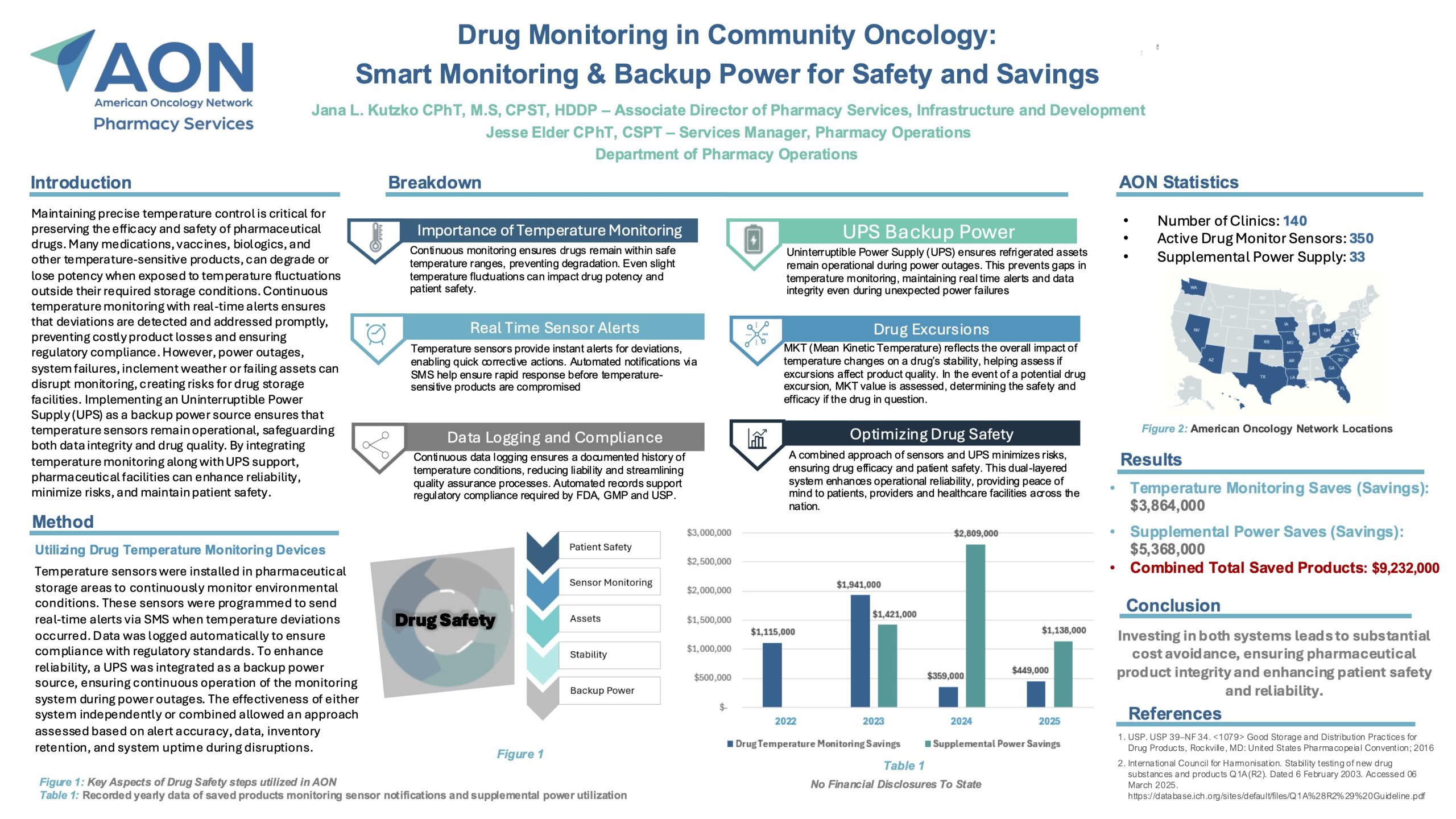
Temperature sensors were installed in pharmaceutical storage areas to continuously monitor environmental conditions and document temperature stability. Sensors were configured to generate real-time short message service (SMS) alerts for temperature deviations, enabling timely corrective action. All monitoring data were automatically logged to support regulatory documentation and compliance requirements. UPS was integrated to maintain continuous monitoring and data capture during power outages. System performance was assessed based on alert accuracy, data integrity, inventory retention, and monitoring uptime during disruptions.
Adaptability:
Throughout the American Oncology Network (AON), continuous temperature monitoring is important to ensure that drugs remain within safe temperature ranges for each product and to prevent degradation. Temperature sensors that provide real-time alerts for deviations enable quick corrective actions. This allows each clinic within AON to adapt the use of sensors and maintain appropriate stewardship of products by ensuring proper storage conditions. Documentation: Continuous data logging ensures a documented history of temperature conditions, reducing liability and streamlining quality assurance processes. If deviations are reported, they are thoroughly documented through real-time temperature readings and historical data. Automated records support regulatory compliance requirements established by the United States Food and Drug Administration (FDA), Good Manufacturing Practices (GMP), and the United States Pharmacopeia (USP). This documentation also helps AON identify practices within the network that may require a UPS to ensure refrigerated assets remain operational during power outages or power failures.
Significance:
A combined approach using temperature sensors and UPS options minimizes risks and ensures drug efficacy and patient safety. This dual-layered system enhances operational reliability by providing a comprehensive approach to stewardship of products at the practice level. Given the high cost of these therapies, an additional layer of protection is necessary to avoid spoilage and costly replacements. Investing in both systems has resulted in significant cost savings and product protection, exceeding $9,232,000 over the past 4.5 years within AON.
Funding: Not applicable.
Send your feedback
Please do not include any personal information or details.
"*" indicates required fields
Was this page
helpful?
Send your feedback
Please do not include any personal information or details.
"*" indicates required fields