

Sociodemographic disparities in the place of death in patients with pancreatic cancer: analysis of Centers for Disease Control and Prevention Wide-Ranging Online Data for Epidemiologic Research data
1Mayo Clinic, Rochester, MN
Background:
Disparities in place of death (PoD) of patients with pancreatic adenocarcinoma (PDAC) remain poorly understood. We examined sociodemographic differences in PoD among US PDAC decedents from 2003 to 2020.
Objectives:
- Describe national trends in place of death among patients with pancreatic adenocarcinoma in the United States from 2003 to 2020.
- Evaluate sociodemographic disparities in hospice utilization and end-of-life care settings among pancreatic adenocarcinoma decedents.
Methods:
We analyzed de-identified death certificate data from the Centers for Disease Control and Prevention (CDC) Wide-Ranging Online Data for Epidemiologic Research (WONDER) database for PDAC deaths (ICD-10 C25). Trends in PoD and Average Annual Percentage Change (AAPC) across sociodemographic groups were assessed, with group differences evaluated using Pearson’s Chi-squared tests.
Results:
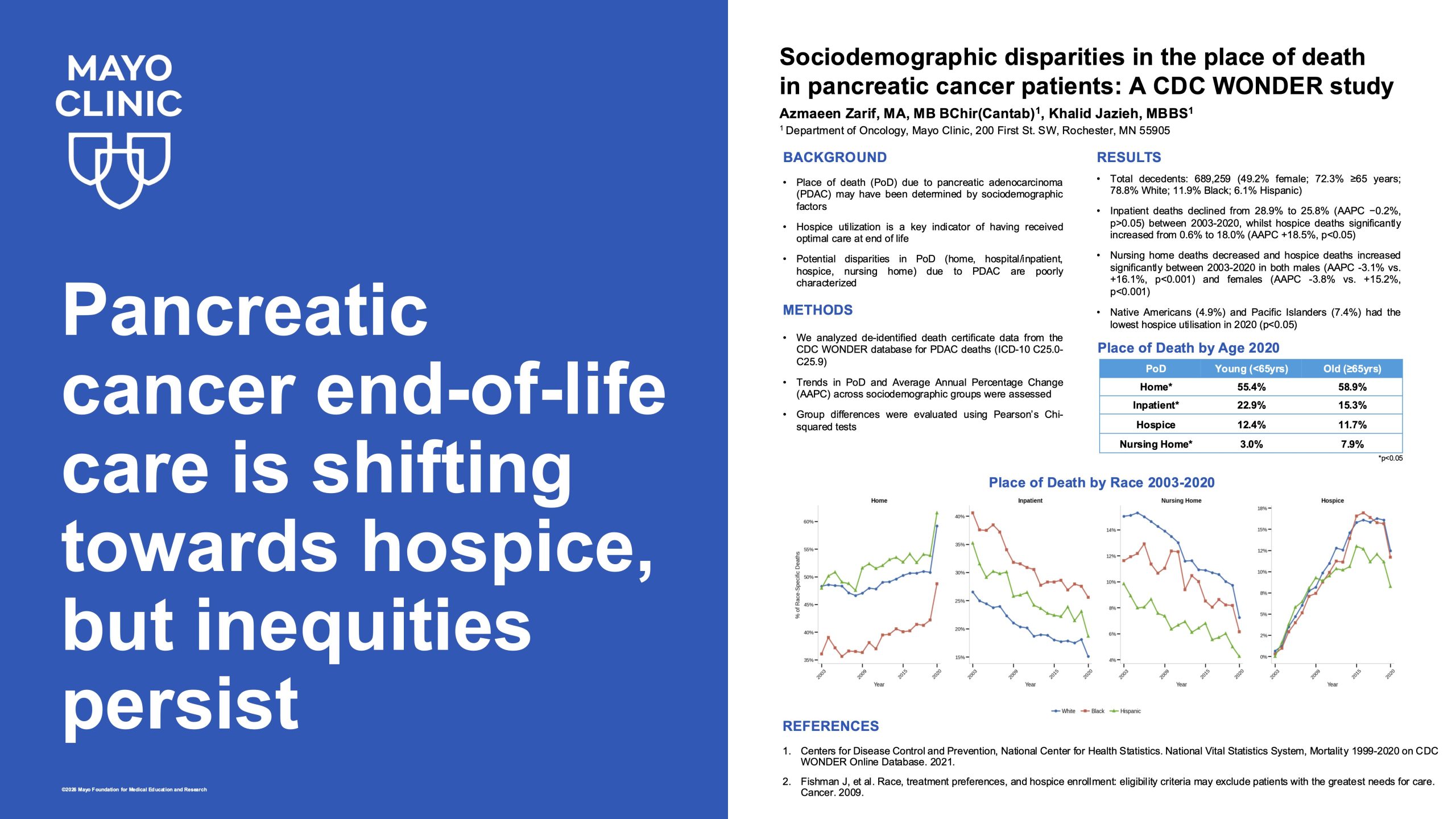
A total of 689,259 decedents were identified; 50.8% were male, 72.3% were aged ≥65 years, 78.8% were White, 11.9% were Black or African American, and 6.1% were Hispanic. From 2003 to 2020, inpatient medical facility deaths declined (28.9% to 25.8%; AAPC −0.2%), while hospice deaths increased markedly (0.6% to 18.0%; AAPC +18.5%). The racial composition of hospice deaths shifted significantly between 2003 and 2020, driven by rising hospice utilization among African American individuals (AAPC +2.7%) and a concurrent decline among White individuals (AAPC −0.5%; p<0.001). Over time, males were less likely to die in nursing homes and more likely in hospice (AAPC −3.1% versus (vs) +16.1%; p<0.001); the same significant trend persisted in females. In 2020, Hispanic patients were significantly more likely to die at home (61.6% vs 59.2%), and less likely to utilize hospice (8.2% vs 12.5%) or die in a nursing facility (4.2% vs 7.2%) compared to non-Hispanics (p<0.001); utilization of the respective facilities by AAPC was unchanged between 2003-2020 (p>0.05). In 2020, Black or African American individuals were significantly more likely to die in a medical facility (25.6% vs 15.1%) and less likely to die at home (48.7% vs 59.2%) or in a nursing home (6.1% vs 7.2%) compared to White individuals (p<0.05). Of all ethnic groups, Native American and Pacific Islander groups had the lowest hospice utilization in 2020 (4.9% and 7.4%, respectively; p<0.001). Moreover, in the same year, younger patients (<65 years old) compared to older patients had comparable rates of hospice use (12.4% vs 11.7%, p>0.05) but significantly higher rates of medical facility deaths (22.9% vs 15.3%, p<0.001) and nursing home deaths (3.0% vs 7.9%, p<0.001).
Conclusions:
PoD patterns in PDAC have shifted towards increased hospice use and fewer inpatient deaths; however, substantial sociodemographic disparities persist, underscoring the need for more equitable access to end-of-life care.
Funding: Not applicable.
Send your feedback
Please do not include any personal information or details.
"*" indicates required fields
Was this page
helpful?
Send your feedback
Please do not include any personal information or details.
"*" indicates required fields