

Bringing clinical leadership together: An interprofessional approach to quality and operational excellence
1Tennessee Cancer Specialists; Knoxville, TN
Background:
In complex oncology practice settings, communication gaps between clinical, operational, and support services can lead to inconsistencies in patient care, workflow inefficiencies, and delays in implementing important updates such as policy, medication, and procedural changes. Additionally, aligning quality initiatives across departments presents a challenge without a centralized, structured approach to communication and decision-making.
Objectives:
- Describe how a multidisciplinary clinical leadership structure supports quality and operational alignment.
- Identify key elements of a structured meeting model that promotes collaboration and decision-making.
- Apply strategies to improve communication and drive quality initiatives across clinical departments.
Intervention:
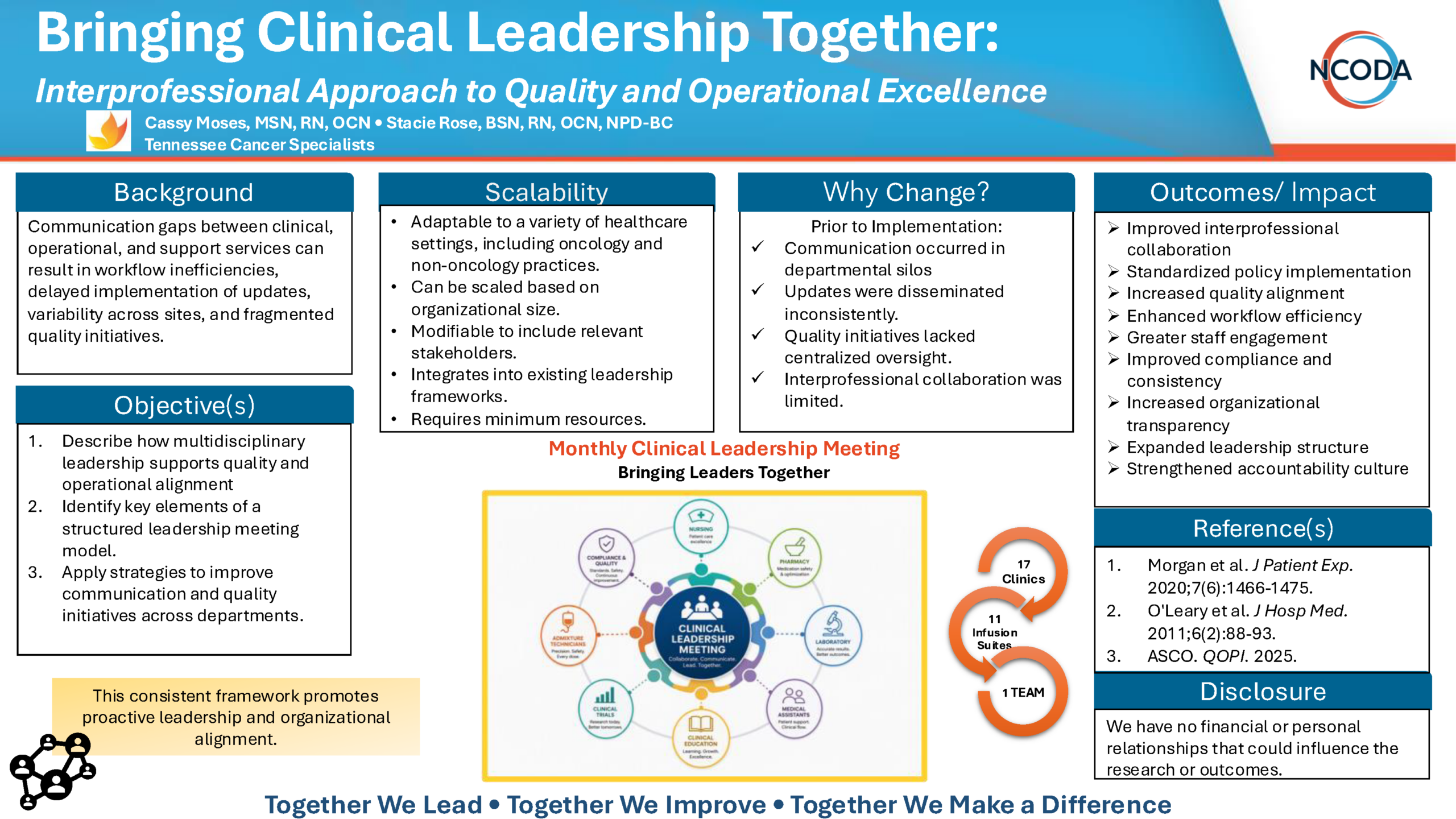
A monthly Clinical Leadership Meeting was established to bring together interprofessional leaders across the organization, including nursing, pharmacy, laboratory, medical assistants, clinical education, clinical trials, administration, and quality/compliance roles. This structured forum provides opportunities to review operations, workflows, and policy updates; evaluate quality initiatives, including oncology quality programs; identify improvement opportunities and operational alignment; and promote collaboration, problem-solving, and standardization. Structured interdisciplinary collaboration improves communication, teamwork, and care coordination across healthcare settings.
Justification:
Prior to implementation, communication across departments occurred in silos, resulting in variability in practice across clinic sites, delayed dissemination of updates, limited interdisciplinary collaboration, inconsistent awareness of quality initiatives, and organizational priorities. A structured leadership forum was needed to improve transparency, streamline communication, and support coordinated decision-making across the organization. Similar challenges have been described in healthcare settings where limited interprofessional collaboration contributes to fragmented communication and reduced coordination.
Outcomes:
Implementation of the Clinical Leadership Meeting has resulted in the identification of a need for additional supervisory structure, leading to the creation of a Medical Assistant Manager role. Additional outcomes include improved interprofessional communication and collaboration; timelier and more consistent implementation of policy and procedural updates; increased visibility and alignment around quality initiatives; an enhanced ability to identify and address workflow inefficiencies; increased staff engagement and representation in leadership decision-making; improved compliance and consistency across clinical operations; and greater organizational awareness of successes and opportunities across clinics. This model supports a proactive approach to clinical operations and quality improvement while fostering a culture of shared accountability and continuous improvement. These meetings are designed to be both informational and action-oriented, with defined action items, assigned owners, and follow-up to ensure accountability and prevent duplication of efforts. Findings are consistent with evidence demonstrating that structured interdisciplinary forums improve teamwork, accountability, and organizational performance.
Adaptability:
This model can be implemented in community oncology, academic centers, and multisite practices by establishing a recurring interdisciplinary leadership forum with representation from nursing, pharmacy, laboratory, medical assistants, quality/compliance, research, and operations. Key components include a standardized agenda, action-item tracking, assigned accountability, and communication of outcomes to frontline staff. Organizations can tailor meeting frequency, membership, and priorities to meet local operational and quality needs.
Conclusion:
Oncology care requires coordination among multiple disciplines, making effective communication essential for patient safety, quality outcomes, regulatory compliance, and operational efficiency. A structured leadership model helps reduce variability in practice, improves dissemination of critical updates, supports quality initiatives, and promotes a culture of shared accountability. By aligning leaders across departments, organizations can more effectively address challenges, standardize care processes, and enhance the overall patient experience.
Funding: Not applicable.
Send your feedback
Please do not include any personal information or details.
"*" indicates required fields
Was this page
helpful?
Send your feedback
Please do not include any personal information or details.
"*" indicates required fields