
Implementing a health-system-wide vial optimization initiative to reduce medication waste and improve financial stewardship
1Yale New Haven Health System – Smilow Cancer Hospital
Background:
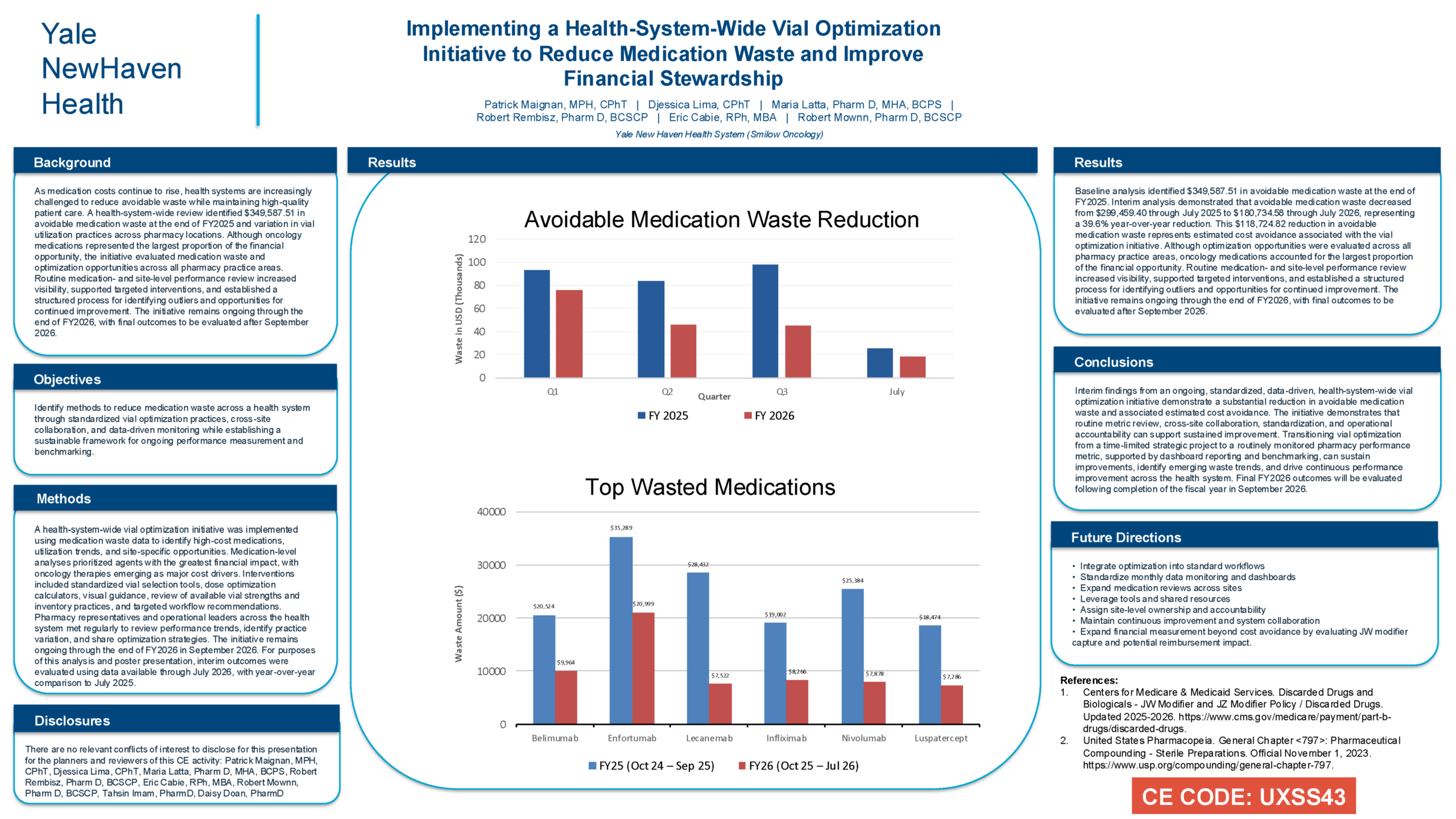
Medication waste presents a significant financial and operational challenge for health systems, particularly as the cost and complexity of injectable therapies continue to increase. A health-system-wide review identified an estimated annual medication waste opportunity of $349,588 and variation in vial utilization practices across pharmacy locations. Although oncology medications represented the largest proportion of the estimated financial opportunity because of their high acquisition cost, the initiative evaluated medication waste and optimization opportunities across all pharmacy practice areas.
Objective:
Identify methods to reduce medication waste across a health system through standardized vial optimization practices, cross-site collaboration, and datadriven monitoring while establishing a sustainable framework for ongoing performance measurement and benchmarking.
Methods:
A health-system-wide vial optimization initiative was implemented using medication waste data to identify high-cost medications, utilization trends, and site-specific opportunities. Medication-level analyses prioritized agents with the greatest financial impact, with oncology therapies emerging as major cost drivers. Interventions included standardized vial selection tools, dose optimization calculators, visual guidance, review of available vial strengths and inventory practices, and targeted workflow recommendations. Pharmacy representatives and operational leaders across the health system met regularly to review performance trends, identify practice variation, and share optimization strategies. Baseline medication waste opportunity was evaluated using fiscal year (FY) 2025 data. Post-implementation outcomes were measured using FY2026 performance data through July 2026.
Results:
Baseline analysis identified an estimated annual preventable medication waste opportunity of $349,588 across the health system. Following implementation of the vial optimization initiative, estimated annual preventable medication waste decreased to $127,783, representing a 63.5% reduction. This equates to an estimated annual cost avoidance of $221,805 through the reduction of preventable medication waste. Although optimization opportunities were evaluated across all pharmacy practice areas, oncology medications accounted for the largest proportion of the financial opportunity. Routine medication- and site-level performance review increased visibility, supported targeted interventions, and established a structured process for identifying outliers and opportunities for continued improvement.
Conclusions:
A standardized, data-driven, health-systemwide vial optimization initiative was associated with a substantial reduction in preventable medication waste, resulting in significant estimated annual cost avoidance while improving financial stewardship. The initiative demonstrated that routine metric review, cross-site collaboration, standardization, and operational accountability can support sustained improvement. Transitioning vial optimization from a time-limited strategic project to a routinely monitored pharmacy performance metric, supported by dashboard reporting and benchmarking, can sustain improvements, identify emerging waste trends, and drive continuous performance improvement across the health system.
Funding: Not applicable.
Send your feedback
Please do not include any personal information or details.
"*" indicates required fields
Was this page
helpful?
Send your feedback
Please do not include any personal information or details.
"*" indicates required fields