
Disproportionate increase in cancer incidence among adults aged 30–50 years during the coronavirus disease 2019 pandemic period: a community-based cohort analysis and potential mechanistic implications
1Carolina Blood and Cancer Care Associates, 2Network for Collaborative Oncology Development & Advancement (NCODA), 3Community Clinical Oncology Research Network, 4Cencora
Background:
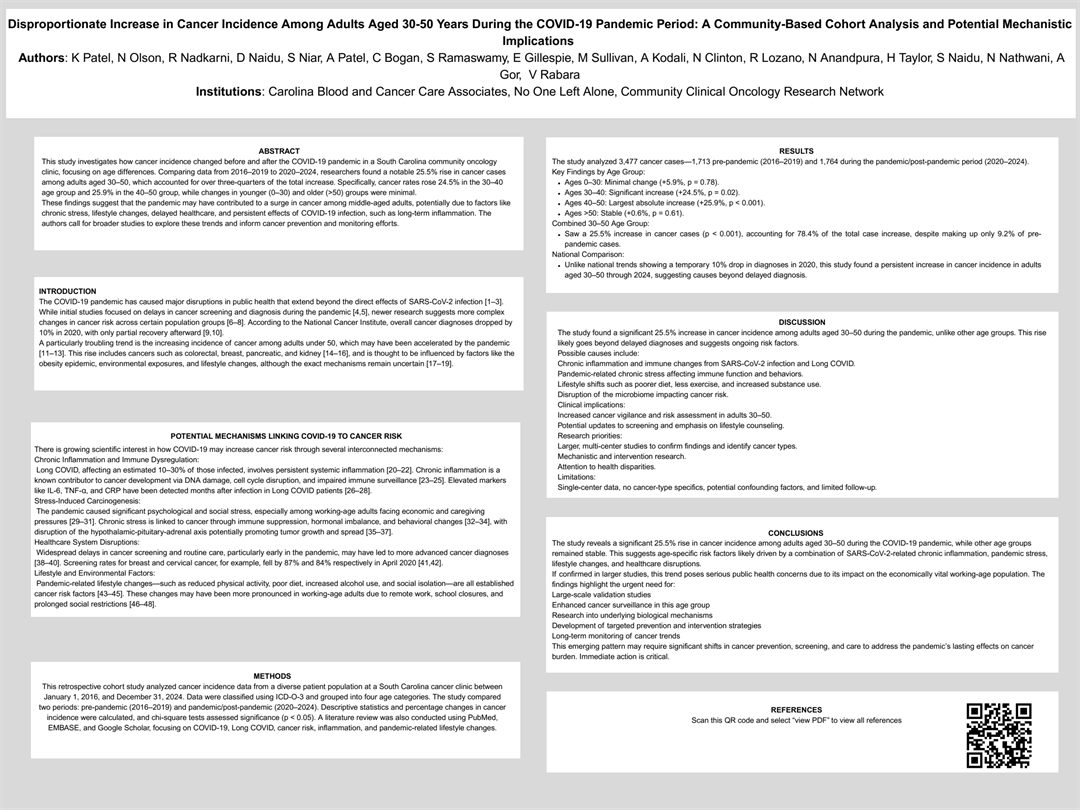
The coronavirus disease of 19 (COVID-19) pandemic has precipitated profound disruptions in healthcare delivery and population health patterns, with emerging evidence suggesting potential long-term carcinogenic implications beyond the acute phase of severe acute respiratory syndrome coronavirus 2 (SARS-CoV-2) infection.
Objectives:
Examine age-stratified cancer incidence patterns in a community-based oncology practice, comparing pre-pandemic (2016-2019) and pandemic/post-pandemic (2020-2024) periods, with particular focus on the working-age population.
Methods:
We conducted a retrospective cohort analysis of cancer incidence data from a community cancer clinic in South Carolina. Patients were stratified by age groups (0-30, 30-40, 40-50, and >50 years) across two distinct time periods. Percentage changes in incidence rates were calculated, and potential mechanisms underlying observed patterns were analyzed through a comprehensive literature review.
Results:
The combined 30-50 age group demonstrated a striking 25.5% increase in cancer incidence (157 to 197 cases), accounting for 78.4% of the total increase between periods. The 30-40 age group showed a 24.5% increase (49 to 61 cases), while the 40-50 age group exhibited a 25.9% increase (108 to 136 cases). In stark contrast, other age groups showed minimal changes: 0-30 years (+5.9%), and >50 years (+0.6%). The overall institutional incidence increased by only 3.0%, indicating that the observed increase was concentrated within the middle-aged adult population.
Conclusions:
This analysis reveals an unprecedented and disproportionate increase in cancer incidence among adults aged 30-50 years during the pandemic period. This finding suggests potential age-specific carcinogenic mechanisms that may include pandemic-related chronic stress, lifestyle disruptions, delayed healthcare access, and possible sequelae of SARS-CoV-2 infection including persistent inflammation. These observations warrant urgent largescale epidemiological investigation and have significant implications for cancer surveillance and prevention strategies.
Funding: Not applicable.
Send your feedback
Please do not include any personal information or details.
"*" indicates required fields
Was this page
helpful?
Send your feedback
Please do not include any personal information or details.
"*" indicates required fields