
Renal dysfunction in multiple myeloma: pathogenesis, diagnosis, and pharmacist-led care strategies
1Touro University College of Pharmacy; 2Albany College of Pharmacy and Health Sciences; 3Pfizer Inc.
Background:
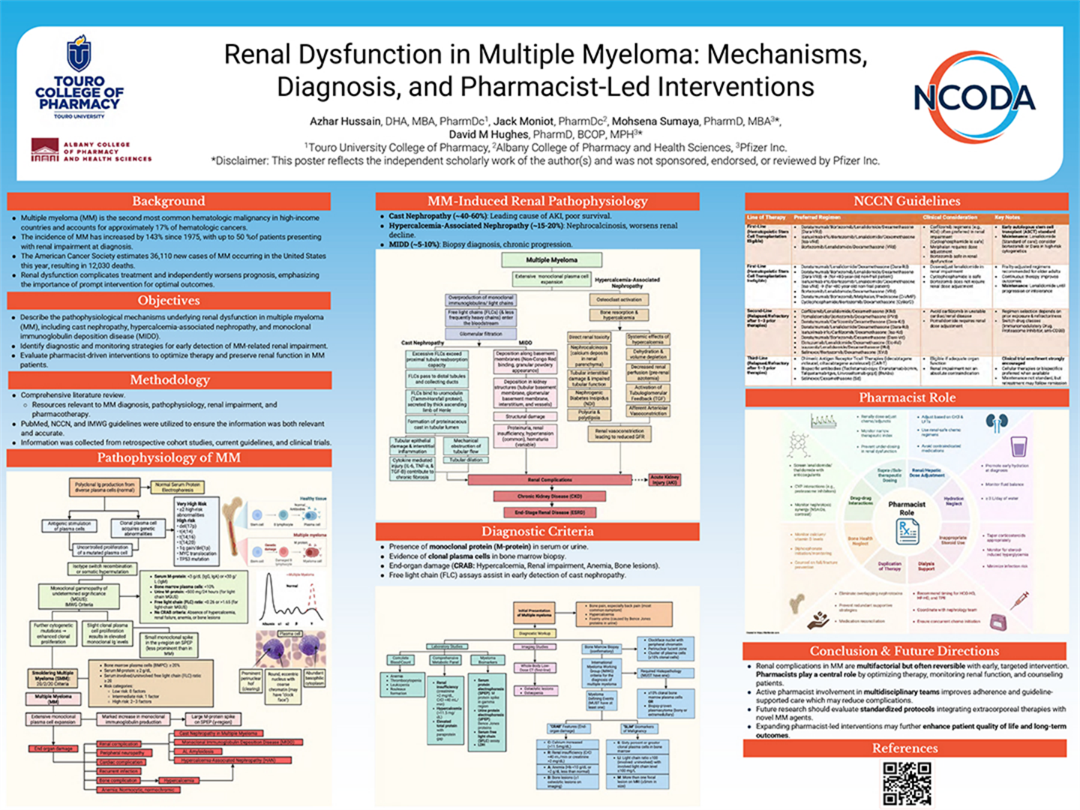
Multiple myeloma (MM) is the second most common hematologic malignancy in high-income countries, accounting for approximately 17% of hematologic cancers. MM incidence has increased by 143% since 1975, and up to 50% of patients present with renal impairment at diagnosis. The American Cancer Society estimates that 36,110 new cases of MM will occur in the United States of America this year, resulting in 12,030 deaths. Renal dysfunction complicates treatment and independently worsens prognosis, emphasizing the importance of prompt intervention for optimal outcomes.
Objectives:
- Describe the pathophysiological mechanisms underlying renal dysfunction in multiple myeloma (MM) including cast nephropathy, hypercalcemia-related nephropathy, and monoclonal immunoglobulin deposition disease (MIDD).
- Identify diagnostic and monitoring strategies for early detection of MM-related renal impairment.
- Evaluate pharmacist-driven interventions to optimize therapy and preserve renal function in MM patients.
Methods:
A comprehensive literature review was conducted, incorporating resources relevant to MM diagnosis, pathophysiology, renal impairment, and pharmacotherapy. PubMed, NCCN Clinical Practice Guidelines in Oncology (NCCN Guidelines®), and International Myeloma Working Group (IMWG) guidelines were utilized to ensure the information was both relevant and accurate. Necessary information was collected from retrospective cohort studies, current guidelines, and clinical trials.
Results:
In patients with MM, renal dysfunction results in dialysis in 12% of cases and is linked to a fourfold higher risk of mortality. Cast nephropathy is the most prevalent mechanism for renal disease in MM, found in 40%–60% of renal biopsies conducted on MM patients. Other mechanisms include hypercalcemia-induced nephrocalcinosis and monoclonal immunoglobulin deposition disease, which results in proteinuria, hypertension, and progressive nephron loss. Notably, novel medication regimens have demonstrated potential for renal recovery: in a retrospective cohort study, 70% of MM patients with renal insufficiency on bortezomib-based regimens and 53% on thalidomide-based regimens achieved a creatinine clearance of at least 60 mL/min. Current evidence supports the role of pharmacists in adjusting nephrotoxic medications, recommending renal-friendly medications, monitoring renal laboratory values, and educating patients on best supportive care practices.
Discussion:
MM is a high-mortality disease frequently complicated by comorbidities. The severity and complexity of MM-related kidney injury heighten the need for early pharmacist intervention in MM treatment. Although limited literature explicitly states the demand for pharmacist-based intervention, it is evident that access to pharmacists will improve renal impairment and prognosis in MM patients. By embracing an active role in the care of MM patients, pharmacists can optimize therapeutic regimens, aid in reversing renal impairment, and educate patients on supportive care measures.
Conclusions:
Renal complications in MM are multifactorial but often reversible with prompt, targeted intervention. Pharmacists play a crucial role in assessing renal risk, optimizing medication regimens, and educating patients. Their involvement in multidisciplinary care teams is essential for improving renal outcomes in MM patients and reducing MM-related mortality and morbidity.
Funding: Not applicable.
Send your feedback
Please do not include any personal information or details.
"*" indicates required fields
Was this page
helpful?
Send your feedback
Please do not include any personal information or details.
"*" indicates required fields