
Pharmacist’s role in cancer risk reduction through diabetes management and obesity-modifying therapies
1Nova Southeastern University
Background:
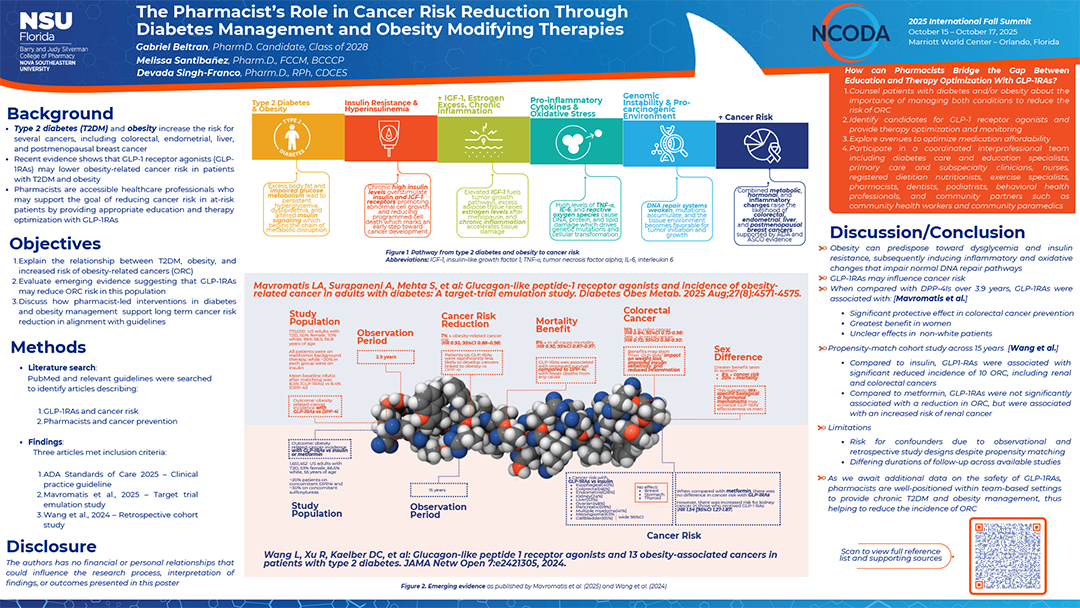
Type 2 diabetes and obesity are well established risk factors for several cancers, including colorectal, endometrial, liver, and postmenopausal breast cancer. Pharmacists, as accessible healthcare professionals, are positioned to lead chronic disease prevention through education, therapeutic optimization, and collaborative care. National guidance from the American Diabetes Association (ADA) and the Centers for Disease Control and Prevention (CDC) supports the pharmacist’s role in improving glycemic control, weight management, and reducing long-term complications. A study presented at the 2025 American Society of Clinical Oncology (ASCO) Annual Meeting found that glucagon-like peptide 1 (GLP-1) receptor agonists were associated with a modest but statistically significant reduction in obesity-related cancer risk among adults with diabetes and obesity. These agents, which are commonly used to improve glycemic control and promote weight loss, may also offer additional preventive benefits in long-term oncology outcomes.
Objectives:
- Explain the relationship between type 2 diabetes, obesity, and increased risk of obesity related cancers.
- Evaluate emerging evidence suggesting that GLP-1 receptor agonists may offer a modest but statistically significant reduction in obesity related cancer risk in adults with diabetes and obesity.
- Discuss how pharmacist led interventions in diabetes and obesity management support long term cancer risk reduction, in alignment with guidance from the ADA, the CDC, and ASCO.
Methods:
This poster integrates recommendations from the ADA, ASCO, and CDC with peer-reviewed evidence on pharmacist-led care to demonstrate how pharmacy professionals can support cancer risk reduction through comprehensive management of diabetes and obesity.
Results:
Key opportunities identified include identifying candidates for GLP-1 therapy, educating patients on its benefits, supporting adherence, and promoting access in both community and ambulatory care settings.
Discussion:
Pharmacist-led interventions targeting diabetes and obesity management may play an important role in reducing cancer risk by addressing modifiable metabolic risk factors. Integration of guideline-driven therapy optimization and patient education aligns with national recommendations and emerging oncology evidence.
Conclusions:
Pharmacy professionals are uniquely positioned to contribute to cancer risk reduction through comprehensive management of diabetes and obesity, including appropriate use of GLP-1 receptor agonists in collaboration with interdisciplinary care teams.
Funding: Not applicable.
Send your feedback
Please do not include any personal information or details.
"*" indicates required fields
Was this page
helpful?
Send your feedback
Please do not include any personal information or details.
"*" indicates required fields