
Pharmacist-driven outcomes for patients on oral oncology medications: clinical impact of an integrated specialty pharmacy model
1Shields Health Solutions
Background:
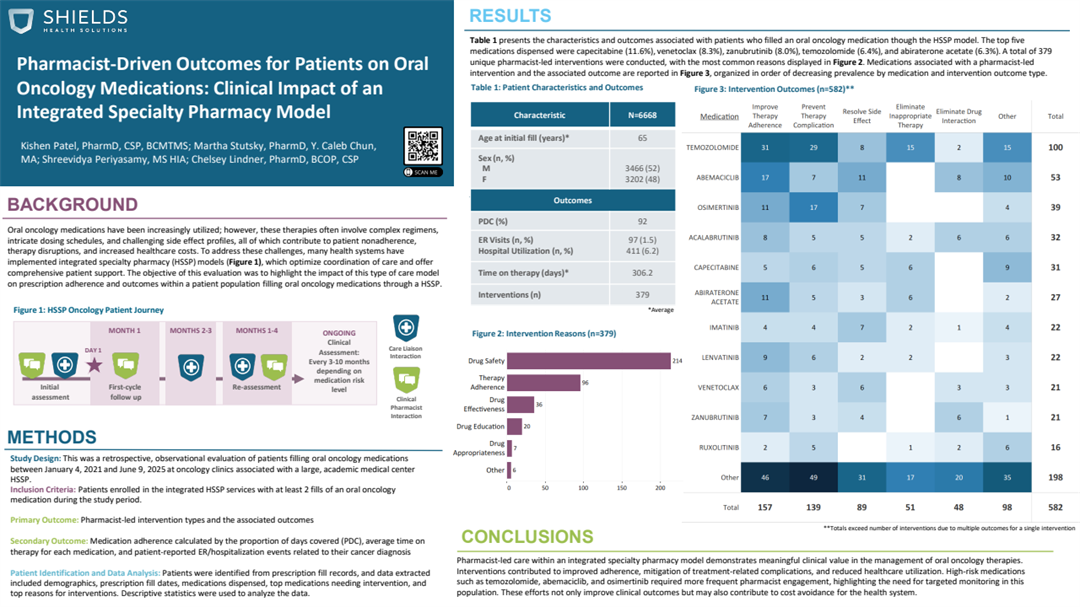
Oral oncology medications have been increasingly utilized; however, these therapies often involve complex regimens, intricate dosing schedules, and challenging side effect profiles, all of which contribute to patient nonadherence, therapy disruptions, and increased healthcare costs. To address these challenges, many health systems have implemented integrated specialty pharmacy (HSSP) models, which optimize coordination of care and offer comprehensive patient support. The objective of this evaluation was to highlight the impact of this type of care model on prescription adherence and clinical outcomes within a patient population filling oral oncology medications through a HSSP.
Objectives:
- Evaluate the clinical impact of pharmacist-led interventions within an integrated health system specialty pharmacy.
- Assess medication adherence and healthcare utilization outcomes in patients receiving oral oncology therapies.
- Identify high-risk medications that benefit from increased pharmacist engagement.
Methods:
This retrospective, observational evaluation included all patients who filled oral oncology prescriptions between January 4, 2021, and June 9, 2025 at an academic HSSP affiliated with oncology clinics. Data collected included patient demographics, prescription information, fill dates, patient-reported emergency room (ER)/hospitalization utilization events and pharmacist-led interventions. Primary outcomes: types of pharmacist-led interventions and associated clinical impact. Secondary outcomes: medication adherence (measured by the proportion of days covered [PDC]), and patient-reported ER/hospitalization rates related to their cancer diagnosis.
Results:
Within the study period, a total of 6668 unique patients with an average age of 65 years filled oral oncology medications at the HSSP. The top five medications dispensed were capecitabine (11.6%), venetoclax (8.3%), zanubrutinib (8.0%), temozolomide (6.4%), and abiraterone acetate (6.3%). A total of 379 unique pharmacist-led interventions were conducted, which were most associated with the following medications: temozolomide (15%), abemaciclib (8.4%), osimertinib (7.1%), acalabrutinib (5.3%), and capecitabine (5.0%). The most common reasons for pharmacist intervention included drug safety (56%), drug therapy adherence (25%), drug therapy effectiveness (10%), disease state education (5%), and drug therapy appropriateness (2%). These interventions led to 582 discrete outcomes reported, with the largest impact being on potentially improving therapy adherence (27%), preventing therapy complication (24%), and resolving side effect challenges (15%). The average PDC for the population was 92%. The rate of hospitalization and ER utilization was 6.2% and 1.5%, respectively.
Conclusions:
Pharmacist-led care within an integrated specialty pharmacy model demonstrates meaningful clinical value in the management of oral oncology therapies. Interventions contributed to improved adherence, mitigation of treatment-related complications, and reduced healthcare utilization. High-risk medications such as temozolomide, abemaciclib, and osimertinib required more frequent pharmacist engagement, highlighting the need for targeted monitoring in this population. These efforts not only improve clinical outcomes but may also contribute to cost avoidance for the health system.
Funding: Not applicable.
Send your feedback
Please do not include any personal information or details.
"*" indicates required fields
Was this page
helpful?
Send your feedback
Please do not include any personal information or details.
"*" indicates required fields