
Palliative pathways project: an initiative to increase timely referrals to palliative care
1University of Cincinnati
Background:
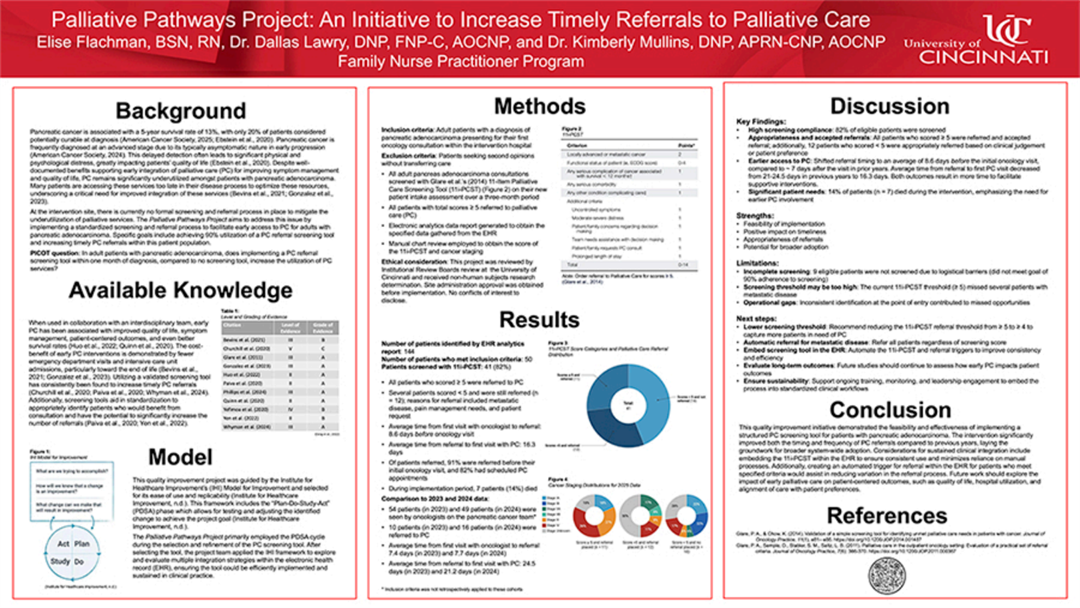
Pancreatic cancer is often diagnosed at an advanced stage, resulting in significant physical and psychological distress. Early integration of palliative care improves symptom management, reduces healthcare costs, and may increase survival. Despite these benefits, palliative care (PC) is underutilized among patients with pancreatic adenocarcinoma. Using screening tools can significantly increase palliative care referrals—by as much as threefold. The 11-Item Palliative Care Screening Tool (11iPCST), with a positive predictive value of 80%, yields twice as many referrals compared to clinical judgment alone.
Objectives:
- Describe the benefits of early palliative care for patients with pancreatic adenocarcinoma.
- Identify the benefits of utilizing screening tools in clinical practice.
- Discuss strategies for increasing timely referrals to palliative care.
Research Question:
In adult patients with pancreatic adenocarcinoma, does implementing a PC referral screening tool within one month of diagnosis, compared to no screening tool, increase the utilization of PC services?
Methods:
This quality improvement project followed the Institute for Healthcare’s Model for Improvement. Over three months, all adult pancreatic cancer patients were screened at their initial virtual intake visit by a nurse practitioner (NP). Patients scoring ≥5 on the PCST were referred to palliative care. The NP used an Epic “Smart Phrase” to document scores in the encounter note. Data were extracted from the electronic medical record (EMR) via an analytics report.
Results:
Out of 144 identified patients, 50 met inclusion criteria. Of these, 41 (82%) were screened. Eleven patients scored ≥5 and were referred; 12 scored <5 but were also referred due to factors like metastatic disease and patient preference. Eighteen patients with scores <5 were not referred. Compared to the same three-month period in 2023–2024, average time from first oncology visit to palliative referral decreased by ~16 days, and time from referral to first palliative visit decreased by ~6 days. Most stage intravenous (IV) patients were referred appropriately, though four stage III/IV patients with scores <5 were not.
Conclusions:
This quality improvement initiative demonstrates that standardized screening can effectively reduce both the time to palliative care referral and the time to the initial palliative care visit. These results support integrating structured tools into clinical workflows to promote earlier access to supportive care. However, with 29% of referrals involving patients scoring <5, and some patients with metastatic disease not meeting the current referral criteria, there is a clear need to reassess referral thresholds and integrate clinical judgment into the decision-making process. Refining criteria may further improve consistency and ensure timely support for patients with advanced disease.
Funding: Not applicable.
Send your feedback
Please do not include any personal information or details.
"*" indicates required fields
Was this page
helpful?
Send your feedback
Please do not include any personal information or details.
"*" indicates required fields