
Opportunity sizing of oral oncology medication waste at a health system specialty pharmacy
1Shields Health Solutions
Background:
Cancer is among the leading causes of death in the United States of America (USA), and the rising costs of treatment play a significant role on the economic burden of the healthcare system. While oral oncology medications provide many advantages (e.g., convenience of home administration, non-invasive treatment, etc.), several factors can result in medication waste, including therapy holds, dose modifications, treatment discontinuation due to therapy intolerance, transitions of care, or disease progression. These recurrent changes in oral oncology medications may consequently result in waste and superfluous cost to the payer and/or patient.
Objectives:
- Evaluate oral oncology medication waste events and associated costs for patients filling at a health system specialty pharmacy (HSSP).
- Define and distinguish the rate of preventable and non-preventable medication waste events.
Methods:
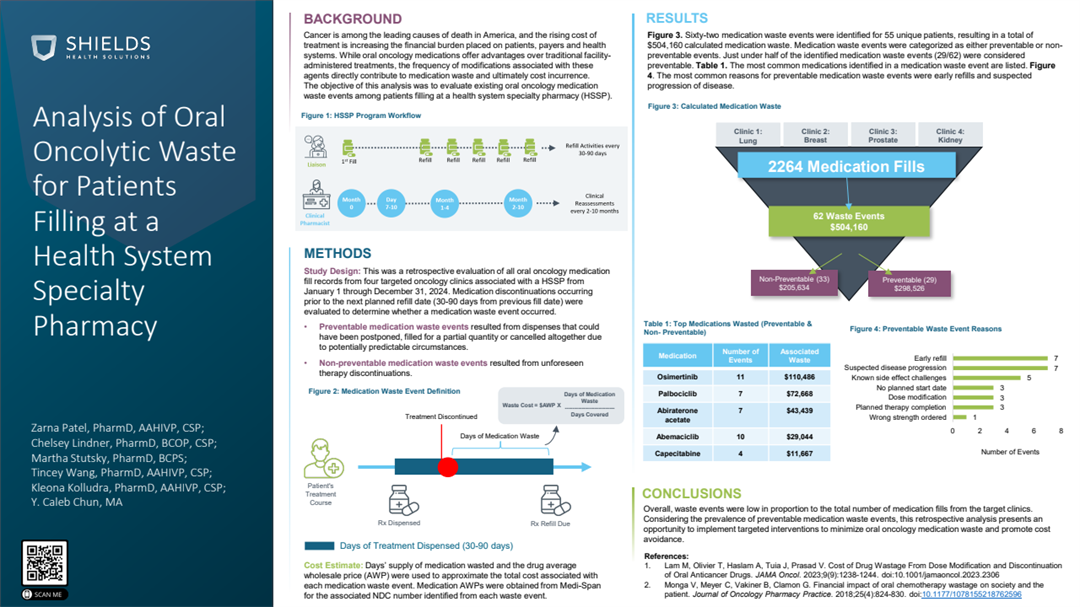
This retrospective, observational analysis identified medication waste events for a subset of patients enrolled in clinical pharmacist services and obtained oral oncology medications from January to December 2024 at a HSSP. Patients from four target oncology clinics for which oral oncology medication discontinuations were documented prior to their next planned refill date (30-90 days from previous fill date, depending on day supply dispensed), were evaluated to determine whether a true medication waste event occurred. If a medication waste event was identified, an estimate of the day supply of medication waste and the drug average wholesale price (AWP) were used to approximate the total cost associated with each waste event. We defined preventable medication waste events as a dispenses that could have been postponed, filled for a partial quantity, or cancelled altogether due to potentially predictable circumstances. Conversely, non-preventable medication waste events were identified as ones that resulted from unforeseen therapy discontinuations.
Results:
During the study period, there were a total of 2,264 oral oncology medication fills, for the four oncology clinics included in the analysis. From these dispenses, there were 62 medication waste events for 55 unique patients, resulting in $504,160 total calculated medication waste. Of the 62 medication waste events, 33 were determined to be non-preventable. The most common medications identified in a medication waste event included osimertinib, abemaciclib, abiraterone acetate, palbociclib, and capecitabine. The most common cancer diagnosis associated with a medication waste event were breast, prostate, lung, and renal cancer.
Conclusions:
The results of this retrospective analysis highlight an opportunity to implement targeted interventions to minimize medication waste and reduce evitable costs for both patients and third-party payers.
Funding: Not applicable.
Send your feedback
Please do not include any personal information or details.
"*" indicates required fields
Was this page
helpful?
Send your feedback
Please do not include any personal information or details.
"*" indicates required fields