
Exploring the utilization of natural remedies for managing side effects of oral oncolytics in ambulatory hematology-oncology patients
1Memorial Specialty Pharmacy – Memorial Healthcare System
Background:
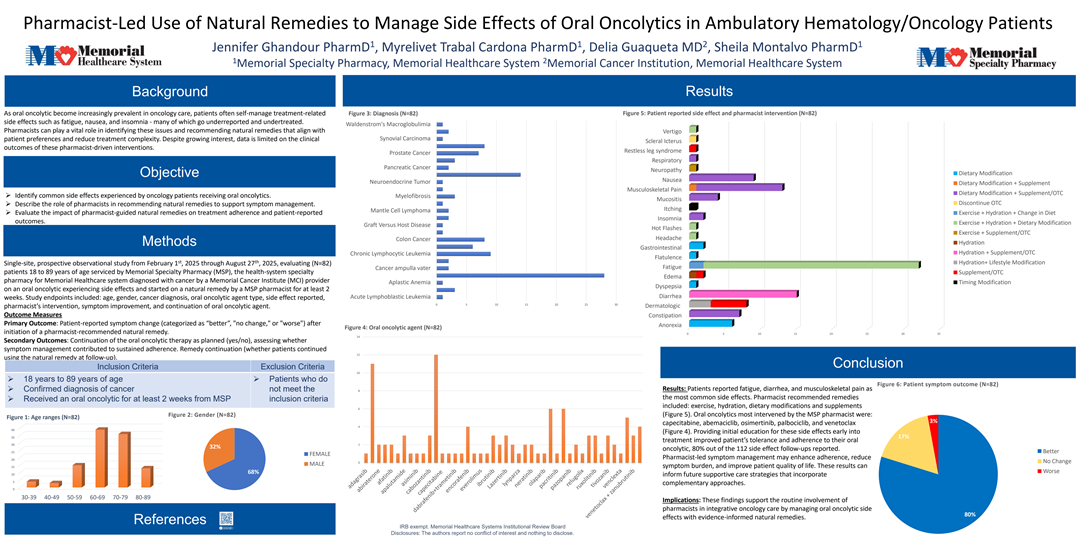
As oral oncolytic use increases in oncology care, patients are managing complex therapies from home, where side effects such as fatigue, nausea, and insomnia often go underreported and undertreated. Pharmacists can play a vital role in identifying these issues and recommending natural remedies that align with patient preferences and minimize pill burden. Despite growing interest, data is limited on the clinical outcomes of these pharmacist-driven interventions.
Objectives:
- Identify common side effects experienced by oncology patients receiving oral oncolytics.
- Describe the role of pharmacists in recommending natural remedies to support symptom management.
- Evaluate the impact of pharmacist-guided natural remedies on treatment adherence and patientreported outcomes.
Methods:
Single-site, retrospective/prospective observational study from February 1st, 2025 through August 21st., 2025, evaluating (N=58) patients 18 to 89 years of age serviced by Memorial Specialty Pharmacy (MSP), the health-system specialty pharmacy for Memorial Healthcare system diagnosed with cancer by a Memorial Cancer Institute (MCI) provider on an oral oncolytic experiencing side effects and started on a natural remedy by a MSP pharmacist for at least 2 weeks. Study endpoints included: age, gender, cancer diagnosis, oral oncolytic agent type, side effect reported, pharmacist’s intervention, symptom improvement, and continuation of oral oncolytic agent. Outcomes: Patient-reported symptom change (categorized as “much better,” “somewhat better,” “no change,” or “worse”) after initiation of a pharmacist-recommended natural remedy. Continuation of the oral oncolytic therapy as planned (yes/no), assessing whether symptom management contributed to sustained adherence. Remedy continuation (whether patients continued using the natural remedy at follow-up).
Results:
Patients reported fatigue, nausea, and insomnia as the most common side effects. Recommended remedies included hydration, dietary vitamin strategies, and light physical activity. Oral oncolytics most intervened by the MSP pharmacist were: abemaciclib, capecitabine, ibrutinib, osimertinib, palbociclib, venetoclax, and zanubrutinib. Providing initial education for these side effects early into treatment improved patient’s tolerance and adherence to their oral oncolytic (73%) out of the 83 side effect follow-ups reported.
Implications:
The study supports routine pharmacist involvement in integrative oncology care by managing treatment side effects with natural remedies. Effective, evidence—informed recommendations may reduce symptom burden, enhance adherence, and improve patient quality of life. These findings could shape future guidelines for pharmacist participation in supportive care strategies using complementary approaches.
Funding: Not applicable.
Send your feedback
Please do not include any personal information or details.
"*" indicates required fields
Was this page
helpful?
Send your feedback
Please do not include any personal information or details.
"*" indicates required fields