
Empowering oncology pharmacy technicians: advancing patient care through community and innovation
1Network for Collaborative Oncology Development & Advancement (NCODA)
Background:
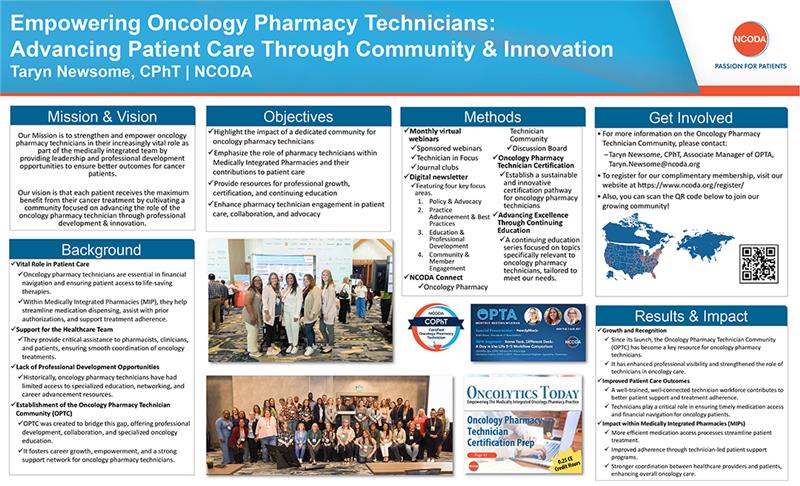
Oncology pharmacy technicians play a crucial role in enhancing patient access, facilitating prior authorization management, promoting adherence, and ensuring seamless medication delivery, particularly within Medically Integrated Pharmacies (MIPs). Despite their growing impact, many technicians lack structured opportunities for professional development, mentorship, and collaboration. To address this need, Network for Collaborative Oncology Development & Advancement (NCODA) established the Oncology Pharmacy Technician Association (OPTA) Community, an international initiative to connect, educate, and empower pharmacy technicians in oncology care.
Mission:
To strengthen and empower oncology pharmacy technicians as vital members of the medically integrated care team by providing leadership, professional development, and growth opportunities to enhance patient outcomes.
Vision:
A future where every cancer patient receives the full benefit of their treatment, supported by a thriving community of oncology pharmacy technicians dedicated to professional excellence and innovation.
Objectives:
- Demonstrate the value of a dedicated international community for oncology pharmacy technicians.
- Elevate the role of pharmacy technicians within MIPs and their influence on patient outcomes.
- Provide pathways for education, certification, and professional growth.
- Increase pharmacy technician engagement in patient care, advocacy, and multidisciplinary teamwork.
Methods:
OPTA offers ongoing professional enrichment through educational webinars, networking events, peer discussion forums, and resource sharing. The community promotes best practices and leadership development while fostering nationwide connections among oncology pharmacy technicians.
Results:
Since its inception, OPTA has expanded rapidly, becoming a critical platform for technician advancement. Members report enhanced confidence, visibility, and engagement within their clinical settings. MIP teams benefit from having more knowledgeable and connected technicians who drive better medication access, patient adherence, and care coordination.
Conclusions:
Building a strong, purpose-driven community for oncology pharmacy technicians directly contributes to improved patient care and professional satisfaction. Through OPTA, pharmacy technicians gain the tools, relationships, and confidence to lead in oncology pharmacy, amplifying their impact on both practice and patient outcomes.
Funding: Not applicable.
Send your feedback
Please do not include any personal information or details.
"*" indicates required fields
Was this page
helpful?
Send your feedback
Please do not include any personal information or details.
"*" indicates required fields