
Barriers in patient–provider communication in cancer care: a scoping review
1GO2 for Lung Cancer
Background:
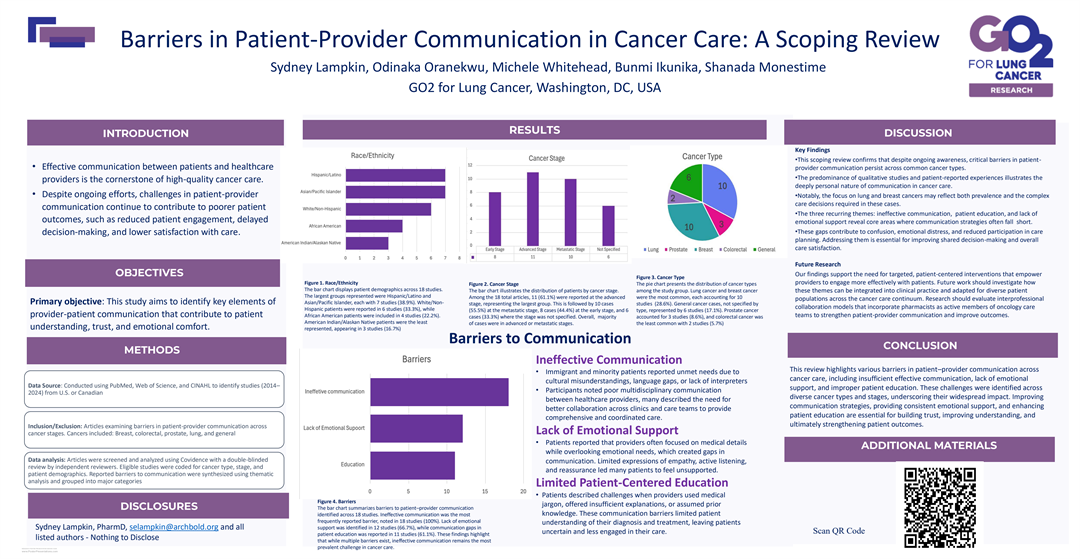
High-quality cancer care relies primarily on effective communication between patients and providers, yet significant gaps remain on their interactions. These limitations often hinder patient understanding of treatment plans, shared decision-making, and overall care satisfaction. To date, these challenges persist in patient-provider communication, impacting the quality of care and leading to unfavorable patient outcomes. While existing data highlight these gaps, our research explored patient-provider communication across the most prevalent cancers to identify recurring themes to ultimately improve approaches to care.
Objectives:
- Identify key elements of provider-patient interactions that contribute to patient understanding, trust, and emotional comfort.
Analyze how the structure of healthcare encounters supports or inhibits patient participation in care decisions.
Methods:
A scoping review was conducted using PubMed, Web of Science, and Cumulative Index to Nursing and Allied Health Literature (CINAHL), sourcing studies from 2014 to 2024, to evaluate interventions within the United States of America (USA) or Canada healthcare system that analyzed barriers in patient-provider communication across different cancer stages and types. Articles were extracted and analyzed using Covidence, a web-based platform employing a double-blinded review process, with independent reviewers evaluating abstracts and full-text articles for inclusion.
Results:
A total of 1,254 studies were initially identified, and 18 studies met the inclusion criteria after screening. The majority of these studies focused evenly on lung cancer and breast cancer (55.5%), were qualitative in design (44.4%), and reflected the patient perspective (88.8%) compared to the provider perspective (33.3%). Three key themes emerged in patient-provider communication: (1) the need for open and active communication to provide comfort and preparedness, (2) limited patient-centered education, (3) lack of empathy to support informed decision-making.
Conclusions:
The results highlight continuing difficulties in patient-provider communication and the importance of clear, empathetic, and proactive strategies to enhance outcomes. The key themes identified can guide multidisciplinary teams in developing targeted interventions to address communication barriers, enhance shared decision-making, and deliver more patient-centered care.
Funding: Not applicable.
Send your feedback
Please do not include any personal information or details.
"*" indicates required fields
Was this page
helpful?
Send your feedback
Please do not include any personal information or details.
"*" indicates required fields