
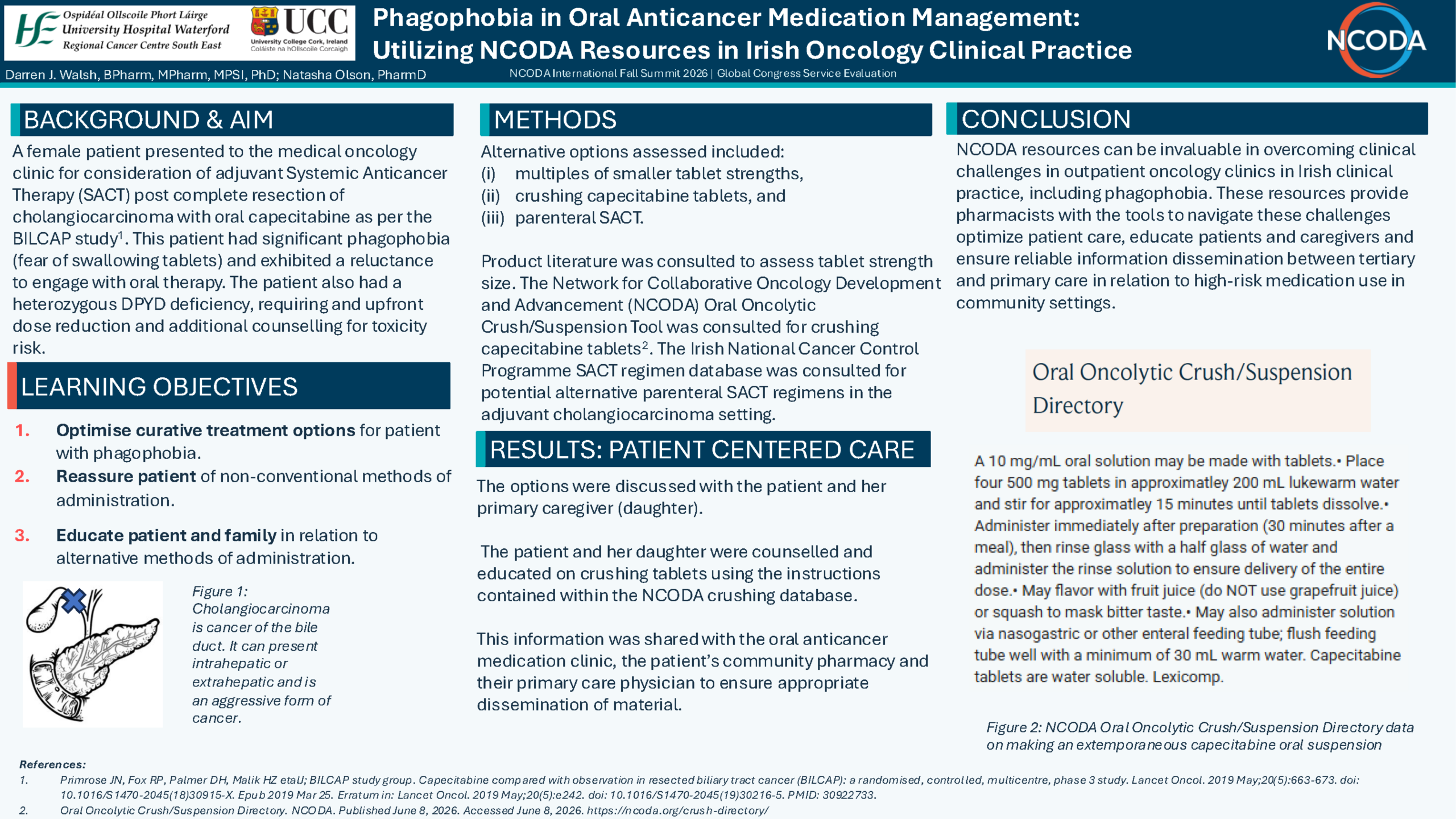
Phagophobia in oral anticancer medication management: Utilizing NCODA resources in Irish oncology clinical practice
11University Hospital Waterford, Waterford, Ireland; 2University College Cork, Cork, Ireland; 3Royal College of Surgeons in Dublin, Dublin, Ireland; 4NCODA, Cazenovia, NY, USA
Background:
A female patient presented to the medical oncology clinic for consideration of adjuvant systemic anticancer therapy (SACT) following complete resection of cholangiocarcinoma with oral capecitabine as per the BILCAP study. This patient had significant phagophobia, a fear of swallowing tablets, and exhibited a reluctance to engage with oral therapy. The patient also had a heterozygous dihydropyrimidine dehydrogenase (DPYD) deficiency, requiring an upfront dose reduction and additional counseling for toxicity risk.
Objective:
- Optimize curative treatment options for patients with phagophobia.
- Reassure the patient of non-conventional methods of administration.
- Educate the patient and family in relation to alternative methods of administration.
Methods:
Alternative options assessed included (1) multiples of smaller tablet strengths, (2) crushing capecitabine tablets, and (3) parenteral SACT. Product literature was consulted to assess tablet strength. The Network for Collaborative Oncology Development & Advancement (NCODA) Oral Oncolytic Crush/Suspension Tool was consulted for crushing capecitabine tablets. The National Cancer Control Programme SACT regimen database was consulted for alternative parenteral SACT regimens in the adjuvant cholangiocarcinoma setting.
Results:
The options were discussed with the patient and her primary caregiver (daughter). The patient and her daughter were counseled and educated on crushing tablets using the instructions contained within the NCODA crushing database. This information was shared with the oral anticancer medication clinic, the patient’s community pharmacy, and primary care physician to ensure appropriate dissemination of material.
Conclusion:
NCODA resources can be invaluable in overcoming clinical challenges in outpatient oncology clinics in Irish clinical practice, including phagophobia. These resources provide pharmacists with the tools to navigate these challenges and optimize patient care, educate patients and caregivers, and ensure reliable information dissemination between tertiary and primary care in relation to high-risk medication use in community settings.
Funding: Not Applicable.
Peer Review Disclosure:
An author of this abstract serves as a Peer Reviewer for NOHMA and was recused from its peer review and acceptance recommendation. The abstract was independently reviewed and approved without the author’s involvement.
Send your feedback
Please do not include any personal information or details.
"*" indicates required fields
Was this page
helpful?
Send your feedback
Please do not include any personal information or details.
"*" indicates required fields