

Expanded institutional experience with prophylactic tocilizumab for outpatient bispecific antibody administration in community oncology
1Carolina Blood and Cancer Care Associates, 2Network for Collaborative oncology Development & Advancement, 3Community Clinical Oncology Research Network, 4Cencora
Background:
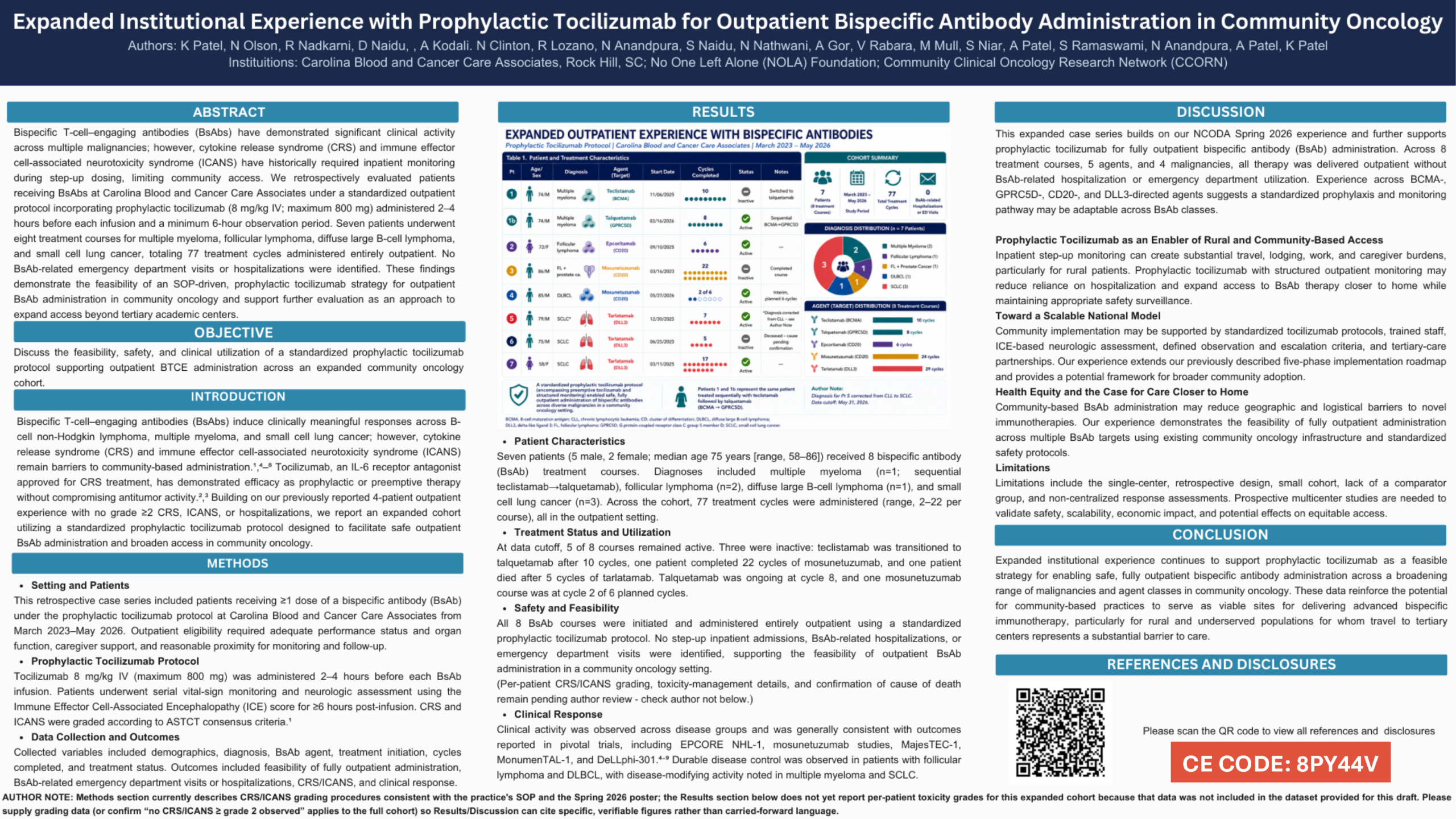
Bispecific T-cell engagers (BTCEs) have transformed outcomes in relapsed/refractory hematologic malignancies and small cell lung cancer (SCLC), but cytokine release syndrome (CRS) and immune effector cell-associated neurotoxicity syndrome (ICANS) have historically confined administration to tertiary academic centers with inpatient step-up dosing. Carolina Blood and Cancer Care Associates (CBCCA), a physician-owned community oncology practice, previously reported that prophylactic tocilizumab enabled fully outpatient BTCE delivery in a 4-patient case series presented at the 2026 NCODA Spring Forum. We now report expanded institutional experience across a broader cohort of BTCE-treated patients.
Objectives:
Discuss the feasibility, safety, and clinical utilization of a standardized prophylactic tocilizumab protocol supporting outpatient BTCE administration across an expanded community oncology cohort.
Methods:
Patients receiving BTCE therapy at CBCCA between March 2023 and May 2026 were treated under an institutional standard operating procedure (SOP) mandating prophylactic tocilizumab (8 mg/kg intravenously [IV], maximum 800 mg) 2–4 hours prior to each BTCE infusion, followed by structured outpatient monitoring with serial vital signs and immune effector cell encephalopathy (ICE) neurologic assessments over a minimum 6-hour observation window. Data collected included diagnosis, agent, treatment initiation date, cycles completed, and treatment status.
Results:
Seven patients (5 males, 2 females; median age 75 years, range 58–86) received 8 BTCE treatment courses under the prophylactic tocilizumab protocol, all delivered entirely in the outpatient setting. Diagnoses included multiple myeloma (n=1, sequential teclistamab then talquetamab), follicular lymphoma (n=2, epcoritamab and mosunetuzumab), diffuse large B-cell lymphoma (DLBCL) (n=1, mosunetuzumab), and small cell lung cancer (n=3, tarlatamab). A cumulative 77 treatment cycles were administered across the cohort (range 2–22 cycles per course). Five treatment courses remain active, including two patients with diseases still within their initial planned regimen. Consistent with the practice’s established prophylactic tocilizumab protocol and prior institutional reporting, no unplanned hospitalizations or emergency department visits attributable to BTCE-related toxicity were identified in this expanded cohort. Clinical benefit was observed across diagnoses, including durable disease control in follicular lymphoma and DLBCL and disease-modifying responses in SCLC and multiple myeloma, consistent with outcomes reported in pivotal registration trials for these agents.
Conclusion:
This expanded cohort reinforces that a standardized, SOP-driven prophylactic tocilizumab protocol supports safe, fully outpatient bispecific antibody administration across diverse malignancies in a community oncology setting. These findings strengthen the practice’s implementation roadmap for broadening equitable access to bispecific immunotherapy outside tertiary academic centers.
Funding: Not applicable.
Send your feedback
Please do not include any personal information or details.
"*" indicates required fields
Was this page
helpful?
Send your feedback
Please do not include any personal information or details.
"*" indicates required fields