
Formulary evaluation of targeted oncology therapies: pharmaceutics and therapeutics workflow insights from a Pacific Northwest health system
1Washington State University
Background:
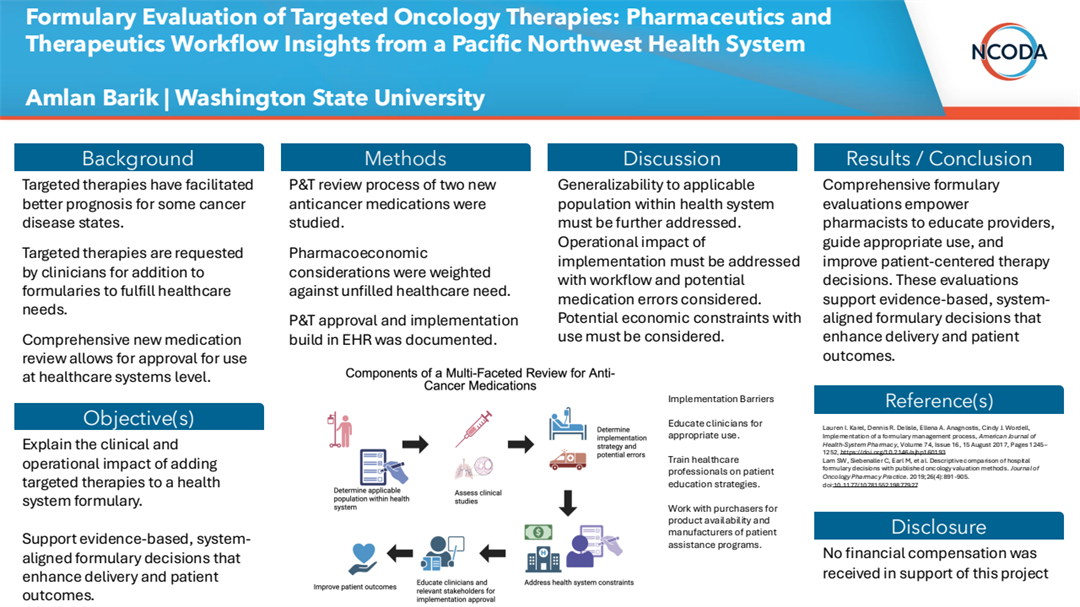
Development of targeted therapies and advancements in protein biomarker analysis have facilitated better prognosis for some cancer disease states and resulted in the reevaluation of treatment pathways, with biomarker testing now critical for guiding therapy. With the evaluation of clinical studies and subsequent Food and Drug Administration (FDA) approval of Biologics License Applications (BLAs) for targeted therapies to fulfill the unmet needs of managing therapy gaps, targeted therapies are constantly requested by clinicians for addition to formularies as some targeted anticancer drugs offer more manageable side effect profiles and higher efficacy in specific cancer disease states. While providers can use non-formulary medications for specific disease states, an in-depth and multi-faceted review of each new targeted anticancer medication is needed prior to a Pharmaceutics and Therapeutics (P&T) meeting for approval of a medication to a formulary. This ultimately increases the likelihood of targeted therapies reaching patients that need them most.
Objectives:
- Describe the components of a multi-faceted review process for targeted anticancer medications.
- Evaluate the generalizability of clinical trial data and BLAs to diverse health system populations.
- Explain the clinical and operational impact of adding targeted therapies to a health system of formulary.
Methods:
The multifaceted review of a targeted anticancer medication involves (1) evaluation of the patient population within a health care system to determine whether a subpopulation would benefit from treatment; (2) evaluation of clinical studies to identify limitations and assess whether study populations are generalizable to the health care system population; (3) determination of operational impact, including dosing, administration, and alert protocols to be built into workflow; (4) pharmacoeconomic considerations to evaluate feasibility of drug utilization; (5) drafting a written summary and presenting findings to the pharmacy and therapeutics (P&T) committee.
Discussion:
The evaluation of clinical studies and BLAs can present challenges. Targeted therapy trials often involve narrowly defined populations, limiting generalizability to broader health system demographics. The side effect profiles, especially for targeted anticancer drugs require careful risk-benefit evaluations. Pharmacoeconomic considerations must also be favorable, even with strongly suggestive efficacy data, as drug utilization can be limited by healthcare economic constraints.
Conclusions:
Comprehensive formulary evaluations empower pharmacists to educate providers, guide appropriate use, and improve patient-centered therapy decisions. These evaluations support evidence-based, systemaligned formulary decisions that enhance delivery and patient outcomes.
Funding: Not applicable.
Send your feedback
Please do not include any personal information or details.
"*" indicates required fields
Was this page
helpful?
Send your feedback
Please do not include any personal information or details.
"*" indicates required fields