
Breaking silos in cancer care: the power of team-based collaboration
1Houston Methodist Clear Lake, Houston, TX; 2Houston Methodist Clear Lake, Nassau Bay, TX
Background:
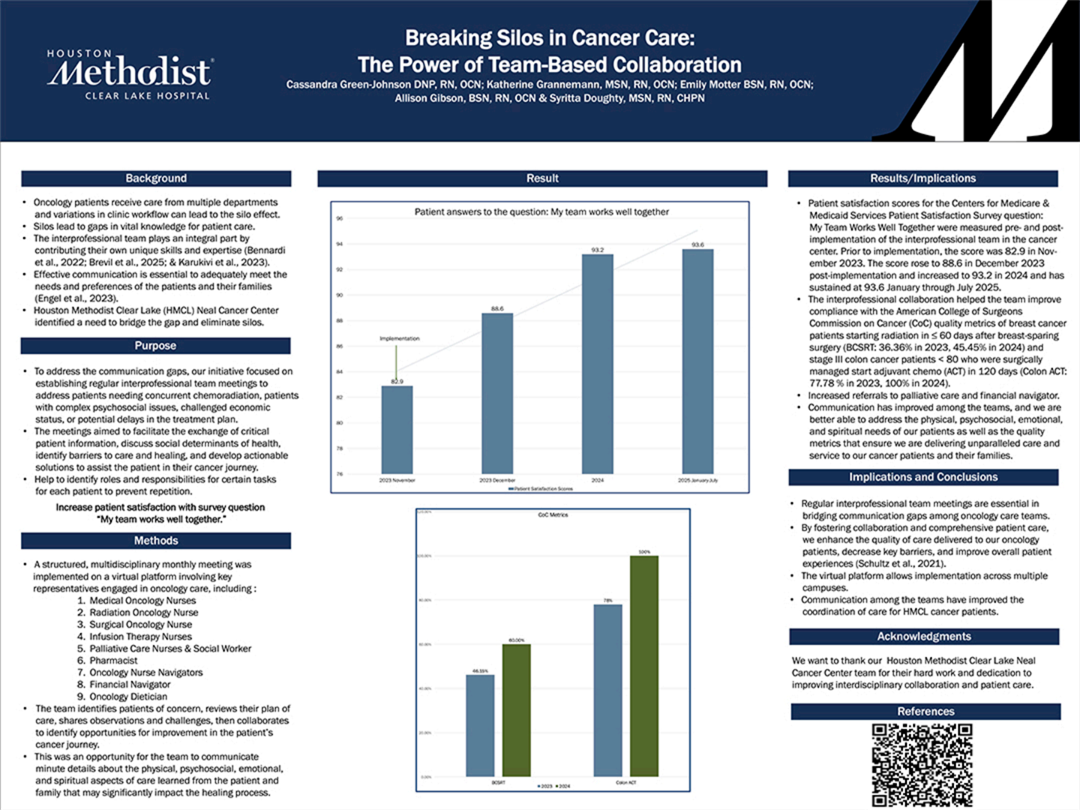
Oncology patients receive care from multiple departments. Clinic, infusion, and radiation vary in cadence and length causing silos. It was noted that some patients were sharing information and concerns with each nurse encounter while others only sparingly. This left gaps in knowledge vital to providing excellent nursing care. The literature reports that everyone on the inter-professional team plays an integral part as they contribute their own unique skills, knowledge, and expertise to deliver high quality cancer care. Effective communication is essential to adequately meet the needs and preferences of patients and families throughout their journey. There was a need to bridge the gap in communication. The team was tasked with developing ways to bridge the gap and eliminate the silos.
Objectives:
-
Motivate attendees to seek opportunities for interprofessional collaborations.
Learn how collaboration increases patient satisfaction.
Understand the importance of breaking down silos to improve patient care communication amongst teams.
Purpose:
To address communication gaps. Our initiative focused on establishing regular interprofessional team meetings. These meetings aim to facilitate the exchange of critical patient information, discuss social determinants of health, identify barriers, and develop actionable solutions to assist the patient in having a successful cancer journey.
Interventions:
A structured, multidisciplinary monthly meeting was implemented involving identified representatives from each department engaged in oncology care. The team reviewed patients, shared observations, and collaborated to identify challenges and opportunities for improving patient care every third Friday of the month. Focus was given to ensure social determinants of health were comprehensively addressed, and barriers to care were identified and mitigated.
Results:
The interprofessional team meetings have significantly improved communication across departments, ensuring that critical patient information is consistently shared. The collaborative approach has led to more cohesive care plans, and a more integrated healthcare experience. Palliative care was able to start rounding in our infusion suite to be proactive with identified patients. At our first meeting in November 2023, patient satisfaction score was at its lowest with 82.9%. In December 2023, scores were 88.6% with patients responding 9/10 on “my team works well together.” In 2024, overall patient satisfaction score for this question was 93.2%.
Conclusions:
Regular interprofessional team meetings continue every third Friday of the month with talks to increase to biweekly meetings. By fostering collaboration and focusing on comprehensive patient care, this approach can enhance the quality of care delivered to oncology patients, address key barriers, and improve overall outcomes.
Funding: Not applicable.
Send your feedback
Please do not include any personal information or details.
"*" indicates required fields
Was this page
helpful?
Send your feedback
Please do not include any personal information or details.
"*" indicates required fields