

Optimizing the caregiver experience during bispecific antibody step-up therapy through a collaborative inpatient and outpatient nursing process
1ThedaCare Regional Cancer Center
Background:
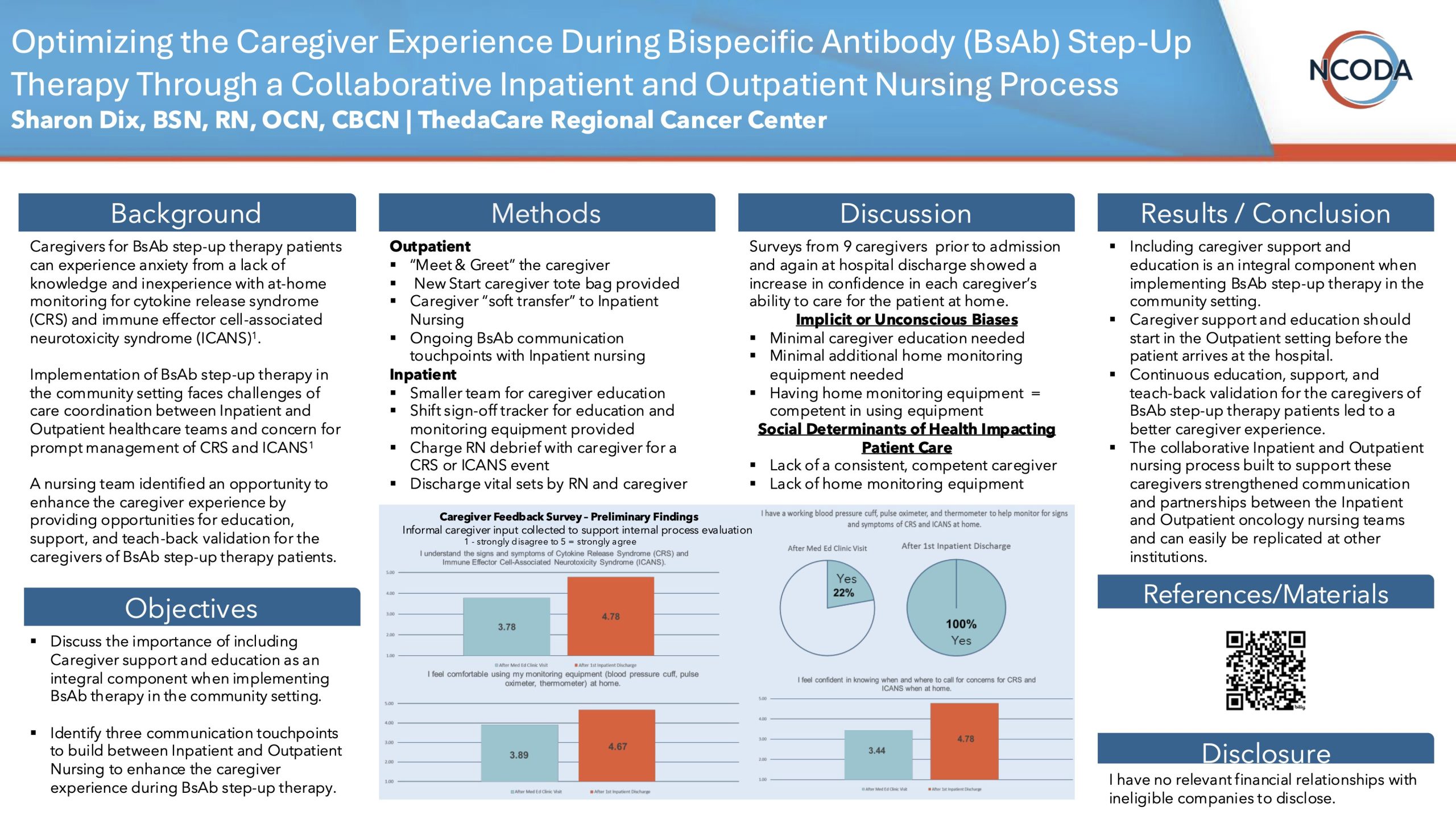
Caregivers for bispecific antibody (BsAb) step-up therapy patients can experience anxiety from a lack of knowledge and inexperience with at-home monitoring for cytokine release syndrome (CRS) and immune effector cell-associated neurotoxicity syndrome (ICANS). A nursing team identified an opportunity to enhance the caregiver experience by providing opportunities for education, support, and teach-back validation for the caregivers of BsAb step-up therapy patients. The nursing team provided home monitoring equipment (automatic blood pressure cuffs, pulse oximeters, oral thermometers) to supplement any equipment needed by the caregiver for home use.
Objectives:
- Discuss the importance of including caregiver support and education as an integral component when implementing BsAb therapy in the community setting.
- Identify three communication touchpoints to build between inpatient and outpatient nursing to enhance the caregiver experience during BsAb step-up therapy.
Purpose:
To improve caregiver confidence and competence in early identification and management of CRS and ICANS at home through standardized caregiver education and consistent touchpoints between inpatient and outpatient nurses.
Methods:
The primary caregiver was identified by outpatient nursing at the initial medication education visit, and the caregiver was provided with BsAb-specific start kit including any home monitoring equipment needed. An inpatient oncology communication group was created for outpatient nurses to easily share pertinent caregiver background information with inpatient nurses in advance of the initial BsAb step-up hospital admission. Inpatient nurses coordinated caregiver education on CRS, ICANS, and practice monitoring vitals each shift using a Caregiver Education Sign-Off Tracker tool to ensure all caregiver educational needs were met prior to hospital discharge. Caregiver survey responses were monitored quarterly by the nursing team to identify ongoing caregiver education needs and opportunities.
Conclusions:
Caregivers for BsAb step-up therapy patients were able to competently obtain a set of vitals with their home monitoring equipment and compare results for accuracy with the inpatient nurse’s final set of vitals at discharge. Caregiver surveys from prior to admission and again at hospital discharge showed a significant increase in confidence in each caregiver’s ability to identify signs and symptoms of CRS and ICANS and to know when and where to call for concerns when at home.
Funding: Not applicable.
Send your feedback
Please do not include any personal information or details.
"*" indicates required fields
Was this page
helpful?
Send your feedback
Please do not include any personal information or details.
"*" indicates required fields