
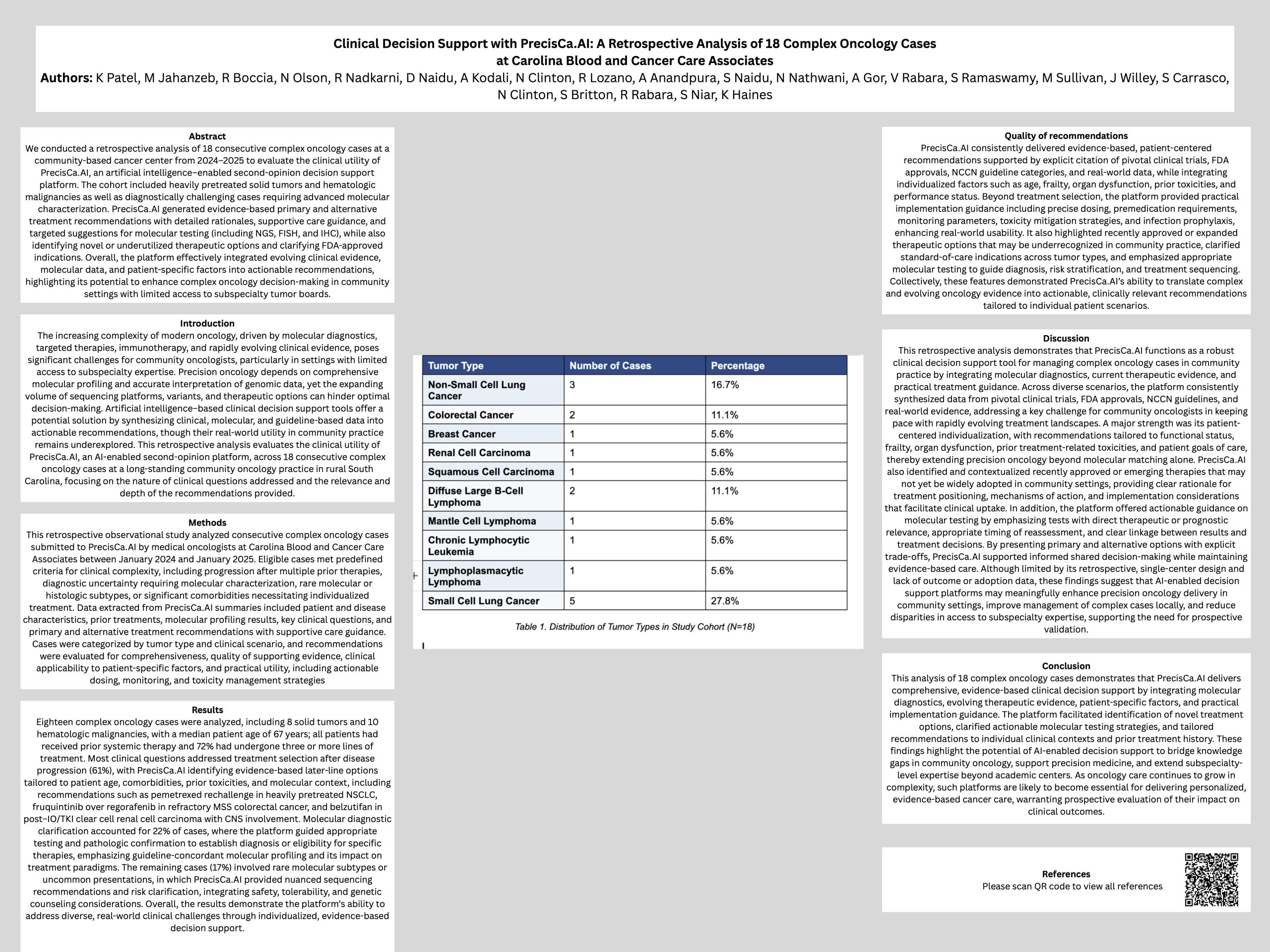
Clinical decision support with PrecisCa.AI: a retrospective analysis of 18 complex oncology cases at Carolina Blood and Cancer Care Associates
1Carolina Blood and Cancer Care Associates, 2PrecisCa.AI, 3NCODA, 4Community Clinical Oncology Research Network, 5Cencora, 6No One Left Alone
Background:
Complex oncology cases often require integration of molecular diagnostics, evolving evidence, and individualized patient factors. Artificial intelligence-enabled clinical decision support tools represent an emerging resource to enhance treatment planning.
Objectives:
- Evaluate the clinical utility of PrecisCa.AI, a comprehensive second-opinion platform, in complex oncology cases at a community-based cancer center.
Methods:
Retrospective analysis of 18 consecutive complex cases from Carolina Blood and Cancer Care Associates (CBCCA) where PrecisCa.AI was utilized between 2024-2025. Cases included heavily pretreated solid tumors, hematologic malignancies, and diagnostic dilemmas requiring molecular characterization. Each case summary included patient demographics, treatment history, molecular profiling, key clinical questions, and PrecisCa.AI recommendations with evidence-based rationale.
Results:
The cohort included 8 solid tumor cases (lung cancer, colorectal cancer, breast cancer, renal cell carcinoma, squamous cell carcinoma) and 10 hematologic cases (diffuse large B-cell lymphoma [DLBCL], mantle cell lymphoma, chronic lymphocytic leukemia [CLL], lymphoplasmacytic lymphoma, small cell lung cancer [SCLC]). PrecisCa. AI provided evidence-based primary recommendations with detailed rationale, secondary alternatives, and comprehensive supportive care guidance. Key contributions included molecular testing recommendations (next-generation sequencing [NGS], fluorescence in situ hybridization [FISH], immunohistochemistry [IHC]), identification of novel therapeutic options (belzutifan for clear cell renal cell carcinoma [ccRCC], fruquintinib for metastatic colorectal cancer [mCRC]), clarification of United States Food and Drug Administration–approved indications (pembrolizumab for cervical cancer), and practical toxicity management strategies.
Conclusions:
PrecisCa.AI demonstrated utility in complex oncology decision-making by synthesizing current evidence, molecular data, and patient-specific factors into actionable treatment recommendations. This AI-enabled platform may enhance clinical decision support in community oncology settings where access to subspecialty tumor boards may be limited.
Funding: Not applicable.
Send your feedback
Please do not include any personal information or details.
"*" indicates required fields
Was this page
helpful?
Send your feedback
Please do not include any personal information or details.
"*" indicates required fields