

Autologous stem cell transplant upfront for multiple myeloma versus delayed at first relapse
1Troy University
Background:
Multiple myeloma (MM) is a heterogeneous plasma-cell malignancy with complex diagnostic pathways, rapidly evolving therapeutic standards, and ongoing debates regarding treatment sequencing, particularly the timing of an autologous Stem Cell Transplant (ASCT). Though ASCT remains a central component of therapy for eligible patients with MM, optimal timing, whether conducted upfront after induction therapy or deferred until first relapse, continues to generate debate.
Objectives:
- Distinguish upfront versus (vs) delayed ASCT in MM and outline the rationale, advantages, and limitations of each approach.
- Summarize key evidence comparing response depth, progression-free survival, and overall survival between early and delayed ASCT.
- Describe how genomic risk, treatment response, and system-level factors guide individualized ASCT timing decisions.
Literature Review:
A review of literature was conducted for research focused on the timing of ASCT and patient outcomes. Online sources were utilized based on professional and peer-reviewed research findings since 2019, as well as current guidelines and treatment recommendations. The studies reviewed include multiple retrospective cohort studies that provide real-world evidence regarding ASCT timing, and two randomized controlled trials, the DETERMINATION trial and the CEPHEUS trial, that offer high-level evidence comparing treatment strategies. Authoritative clinical guidelines and treatment algorithms were reviewed that synthesize evidence into standardized practice recommendations, as well as several narrative reviews with emerging evidence across diagnosis, treatment, and survivorship. This diverse evidence base facilitates a comprehensive comparison of ASCT timing and its clinical implications on progression- free survival (PFS) and overall survival (OS).
Conclusions:
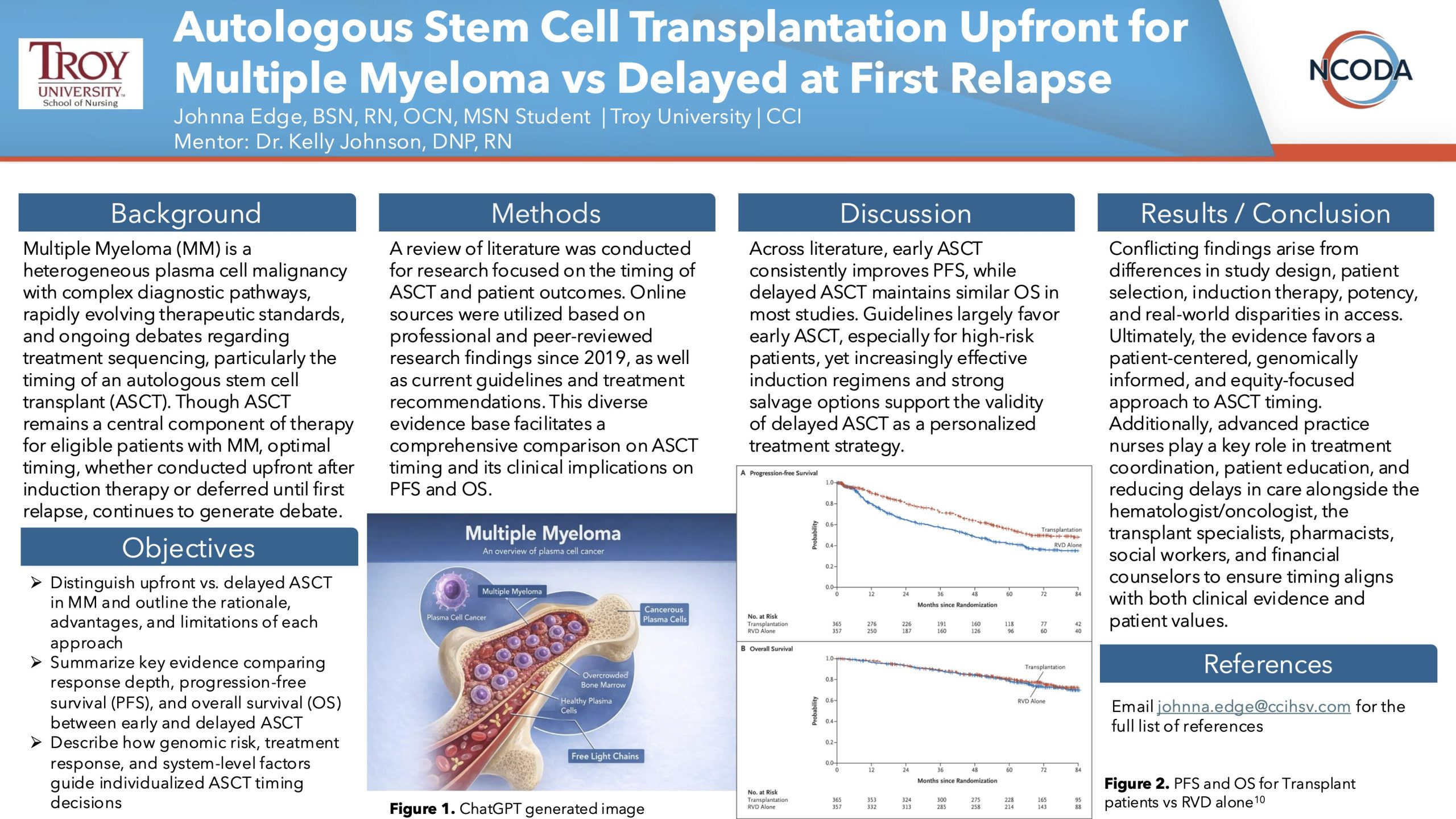
Across the literature, early ASCT consistently improves PFS, while delayed ASCT maintains similar OS in most studies. Guidelines largely favor early ASCT, especially high-risk patients, yet increasingly effective induction regimens and strong salvage options support the validity of delayed ASCT as a personalized treatment strategy. Conflicting findings arise from differences in study design, patient selection, induction therapy potency, and realworld disparities in access. Ultimately, the evidence favors patient-centered, genomically informed, and equity-focused approach to ASCT timing. Advanced practice nurses play a key role in treatment coordination, patient education, and reducing delays in care alongside the hematologist/ oncologist, the transplant specialists, pharmacists, social workers, and financial counselors to ensure that ASCT timing aligns with both clinical evidence and patient values.
Funding: Not applicable.
Send your feedback
Please do not include any personal information or details.
"*" indicates required fields
Was this page
helpful?
Send your feedback
Please do not include any personal information or details.
"*" indicates required fields